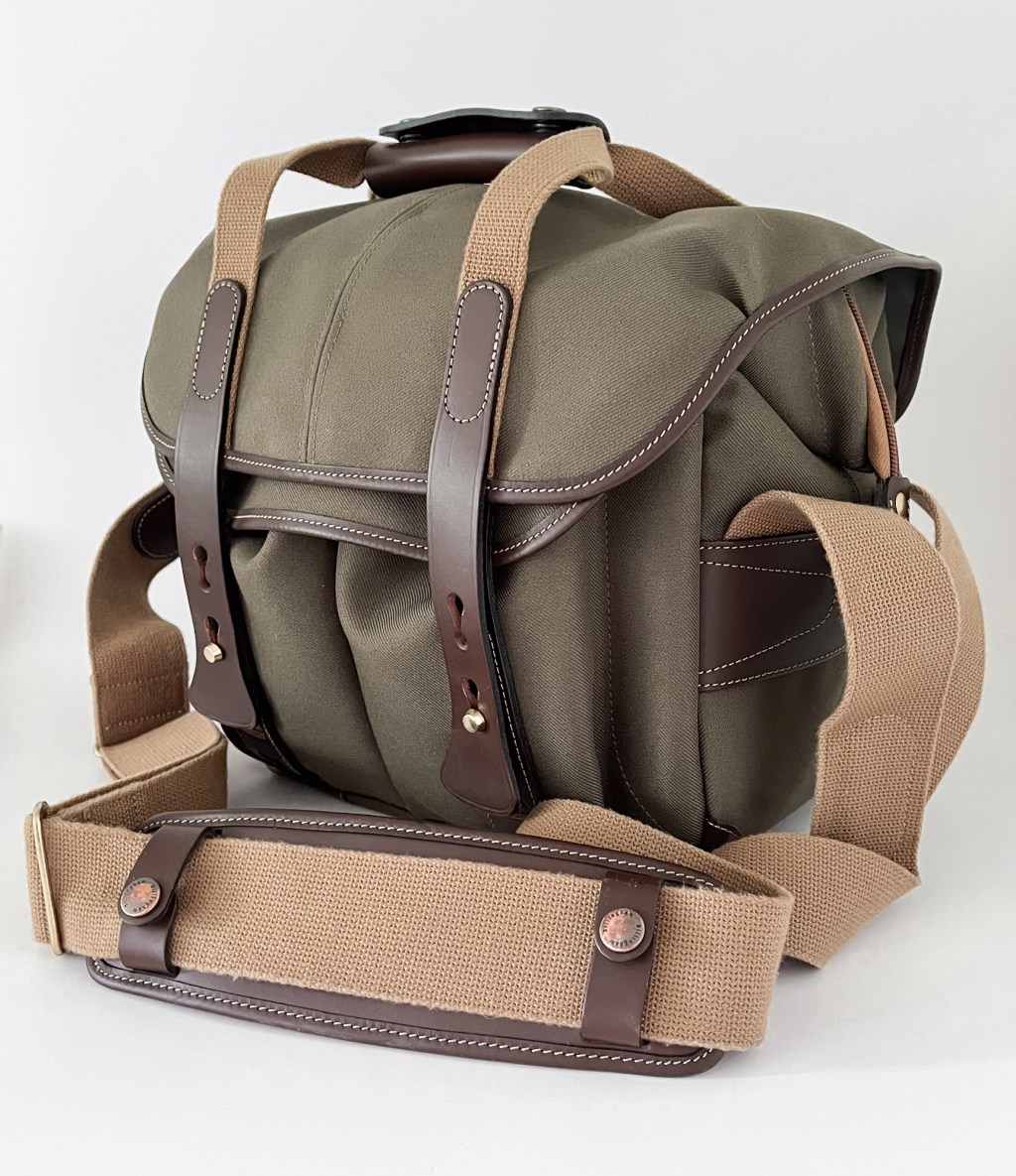
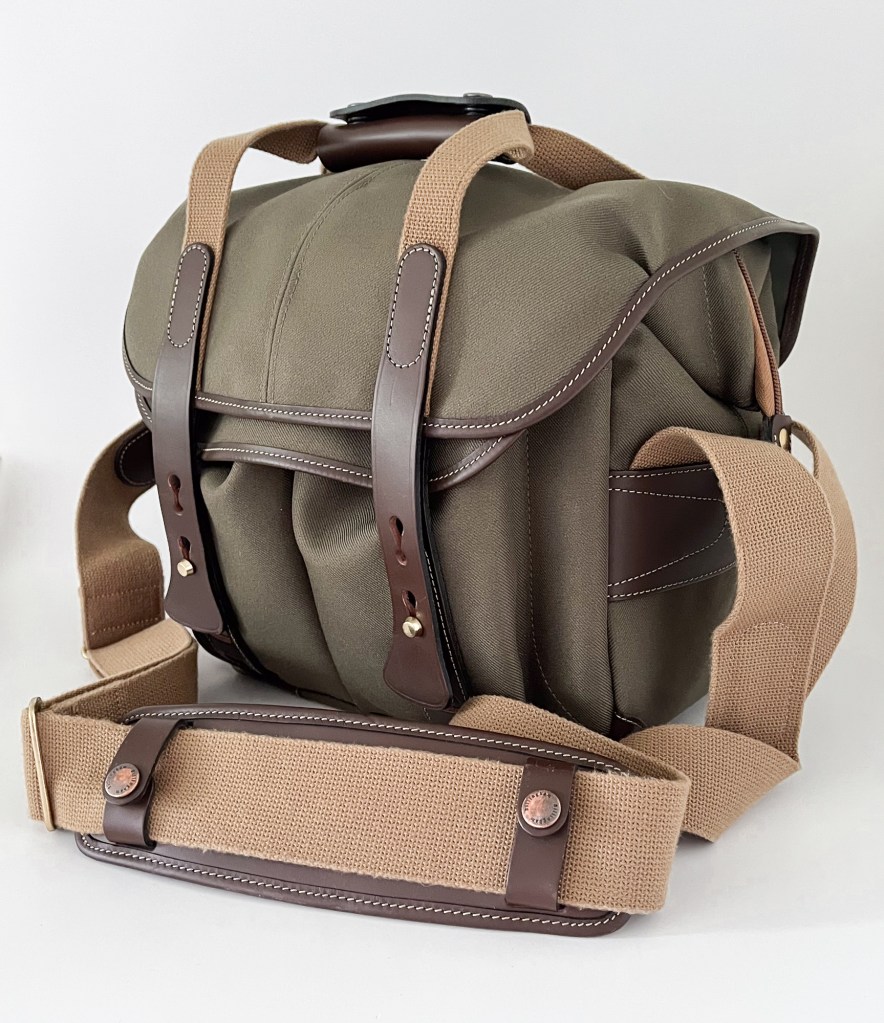
A shoulderbag? For landscapephotography? Yes, I have found that it is possible to use something other than a backpack to carry my photography equipment. With todays mirrorless systems, size and weight has been reduced to the point where you may get your essentials in a shoulder bag, small and lightweight enough to carry all day. Of course, if you need extra clothes, food, camping gear or anything more than your camera and a couple of lenses, a backpack will be preferable. The same goes if you plan longer hikes in rugged terrain. I love my ThinkTank backlight backpacks and still use them all the time, but there are situations where a small bag over your shoulder is more convenient.
I prefer shoulder bags when traveling, working in cities or working out of a car with no plan for longer hikes. Maybe it’s a habit from the old days when I did mostly press-work and there was no such thing as dedicated photography backpacks. The last ten years I have used a ThinkTank retrospective 40 (now discontinued) for this purpose. It has served me quite well for both my Nikon gear and the Hasselblad H system. Last year I travelled to Santorini and tried to fit my Hasselblad X-system in it for the first time. As much as I liked the Retrospective for my old gear, I just couldn’t find an ideal layout for my X-system. The bag was actually too big, soft and a bit flimsy. It would tilt over standing and I felt it didn’t protect my gear well enough. So I started to look for a substitute. Of course I checked out the current Retrospective-line and a few other brands as well. After much research I settled for a Billingham.
Billingham
Billingham is one of those iconic names in photography that many of us have heard of since we started out, like Leica, Zeiss, Gitzo or Hasselblad. Founded by Martin Billingham in 1973, they initially made bags for fishing and hunting. They pretty soon noticed that their bags also were frequently used by photographers. By the end of the seventies the business had been converted to mostly making high-end canvas photography bags. Billingham is currently world-renowned for being hand-made in Britain to the highest standards. The quality of the materials used, the standard of the handcraft and the timeless, classic designs defines the brand. Their design may not be for everyone though, I guess it is one of those things that you either love or hate.
Fabrics, quality and design
All Billingham bags are made of a three layer fabric where a layer of butyl rubber is sandwiched between an outer layer, made of canvas or fibrenyte, and a polyster lining. This makes the fabric 100% waterproof and extremely hard-wearing. While canvas is a cotton-polyester mix, fibrenyte is 100% synthetic. Different bags and different colors come in one or the other material. I have found this to make no difference to me. Both fabrics look and feel almost the same. Fibrenyte is said to be a bit more hard wearing than canvas, but you should be good with either for decades to come. The handles and other details are made of top-grain, vegetable tanned cowhide. It looks, feels and smells terrific. Metal details and zippers are made of top quality brass. The handcraft is second to none. All bags are made with extremely good padding and will protect you gear superbly. The bigger bags even come with a thick base made of padded wood. The strap is the best I have ever used. Even better than on the Retrospective. Extremely well padded and sturdy. A special Y-design (on the bigger bags) for the fitting of the strap to the bag makes it very stable and prevents the bag from tilting while you walk with it. A good solution to a problem I have encountered with most other bags, and just another example of how well thought through all details are.

All their bags have a distinct, recognizable design. As, mentioned, this may not be everyones cup of tea, but if you (like me) like vintage stuff and retro designs, you will probably love it. The bags look like something that could have been used in the military in WWII, or WWI for that matter.
There are several product-lines of photography bags, but they can be roughly divided in two. 1) The largest bags (5-series and 7-series) have room for two rows of equipment and are thus “fatter” in their design. They can be customized with various inserts depending on your need. 2) The smaller bags (E.g. the Hadley line and the S-line) come in a variety of designs and sizes. They are slimmer and generally have room for only one row of gear and have a product specific, removable insert with somewhat less room for customization. Importantly, the design and layout of all their bags is very well thought through. There is a system to the measurements of the bags, padding and inserts and how different gear is carried in the different bags. Just be sure to do proper research before choosing one bag and one interior over another. What are your priorities? What camera and lenses will you need to carry? Do you want room for a laptop? I hope this blog-post can contribute to your research.
Billingham also make other bags in pretty much the same design and with the same materials, eg. laptop bags and weekenders. That way, you can streamline and match your luggage, if that is a priority.
Then there is the matter of cost. Yes, there is a price to pay for having a bag hand-made from top notch materials, to the highest standards, in England. Actually, when I think of it that way, they are not expensive at all. Add that this bag will give your expensive gear superb protection and will probably last you a lifetime, and it may very well be a good investment. Compare it to designer handbags made to the same standards and you will see that what you get is worth the cost.
I have purchased my Billinghams directly from their website. Fast service and expedited shipping. I can recommend it. Billingham also support customization (to some degree) and repair if you should be unfortunate enough to need that. I have paid full prize for my purchases and have no financial or other affiliation with Billingham.
The 207
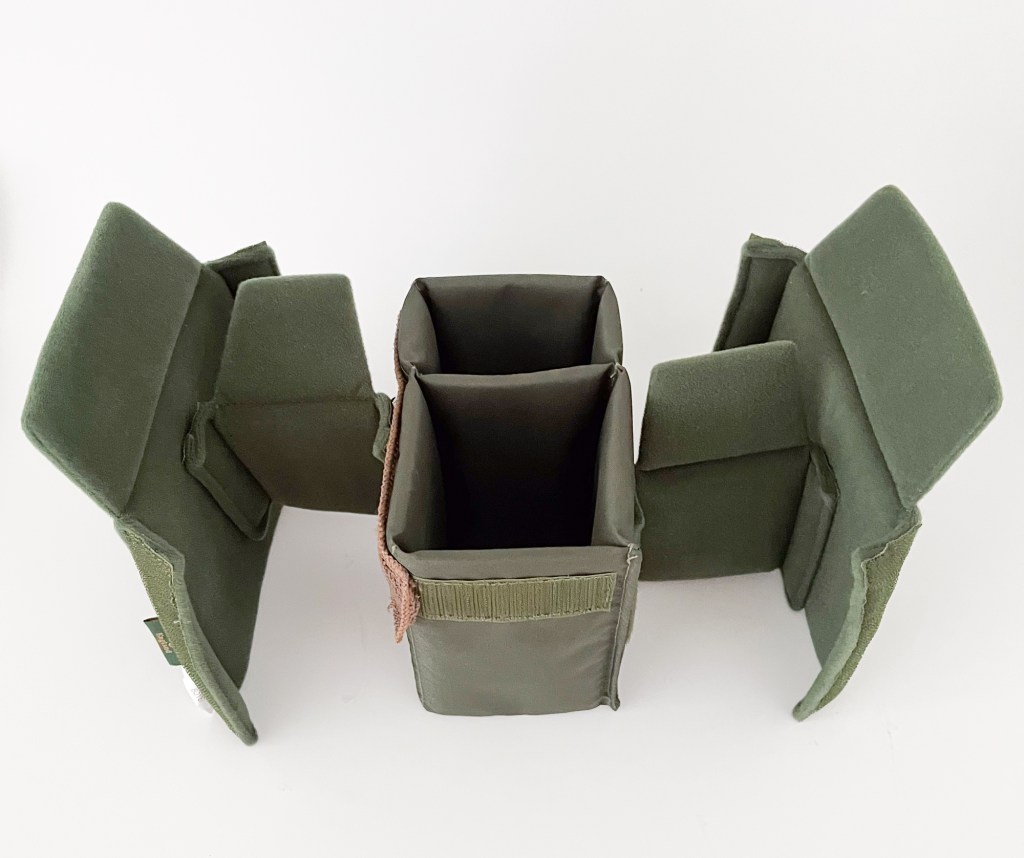
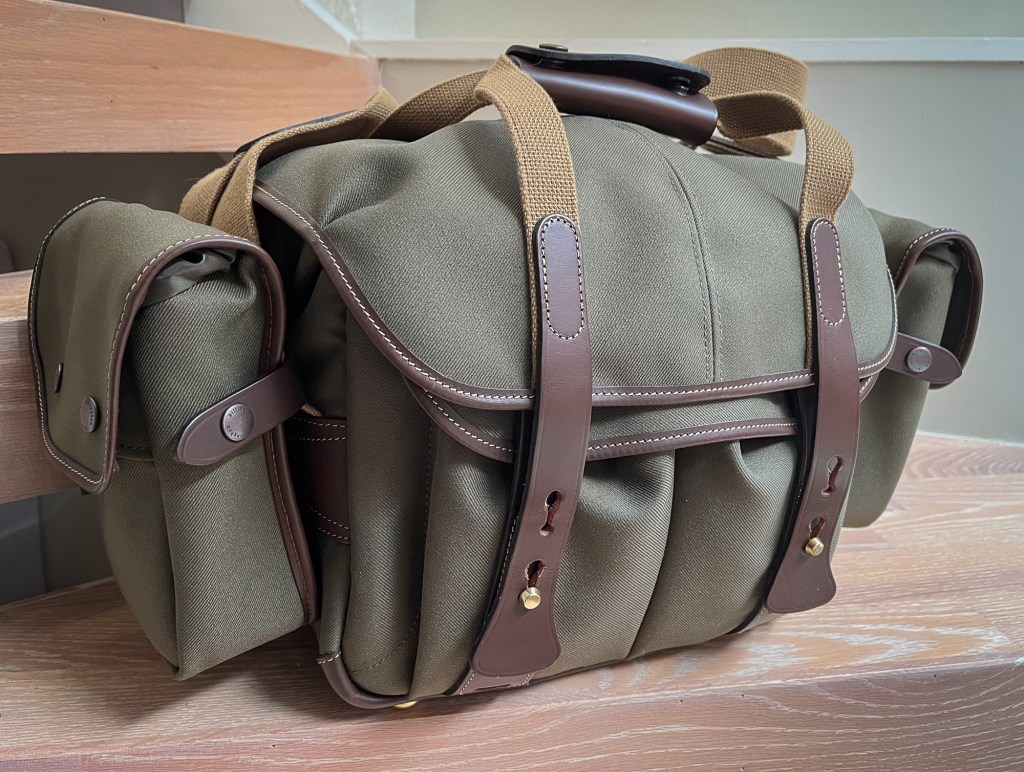
The 207 is the smallest bag in the “7-series” , the only other option currently being the slightly larger 307. The 7-series, like the 5-series, are made with two rows of equipment in mind. The 5- and the 7-series share the internal design to some degree. The rectangular internal compartment is extremely well padded on all four sides. The bottom is equipped with a removable base made of padded wooden plinth. Extremely tough, yet lightweight, and helps maintain the shape of the bag. This was an important point for me, as other bags I have tested out tend to loose their shape when filled with equipment and carried. The Billinghams keep their shape and protect the inside. The 5- and the 7-series can be fitted with internal dividers. I like the “superflex partitions” which basically are cubes of different width and hight, to customize the interior. Single dividers in different sizes can also be purchased.
| Exterior size | W35 x D21 x H30 cm |
| Interior size (main compartment) | W31 x D15 x H22 cm |
| External pockets | 3: 2 front, 1 zippered back (+2 optional Delta pockets) |
| Weight empty w/o Delta pockets but with strap | 1.75 kg |
| Weight with body, 5 lenses, batteries, filters etc | 7.5 kg |
| Price 2023 | $487 |
What separates the 7- and 5-series you might ask? Well, it’s details in their design. E.g how the lid and the opening is made, layout of pockets, how the handles are fitted etc. The 5-series consist of 5 different sizes, while the 7-series only have two. I landed on the 7-series for a couple of reasons. I really like the press-top feature for how the bag opens. Like an old-style doctor’s bag, when you open it fully, it stays open due to two fiberglass/aluminum wands by the zipper. I also fell for the two extra leather handles that makes it possible to lift the bag without closing the lid. Convenient when you’re on a location and just need to move around a few meters.
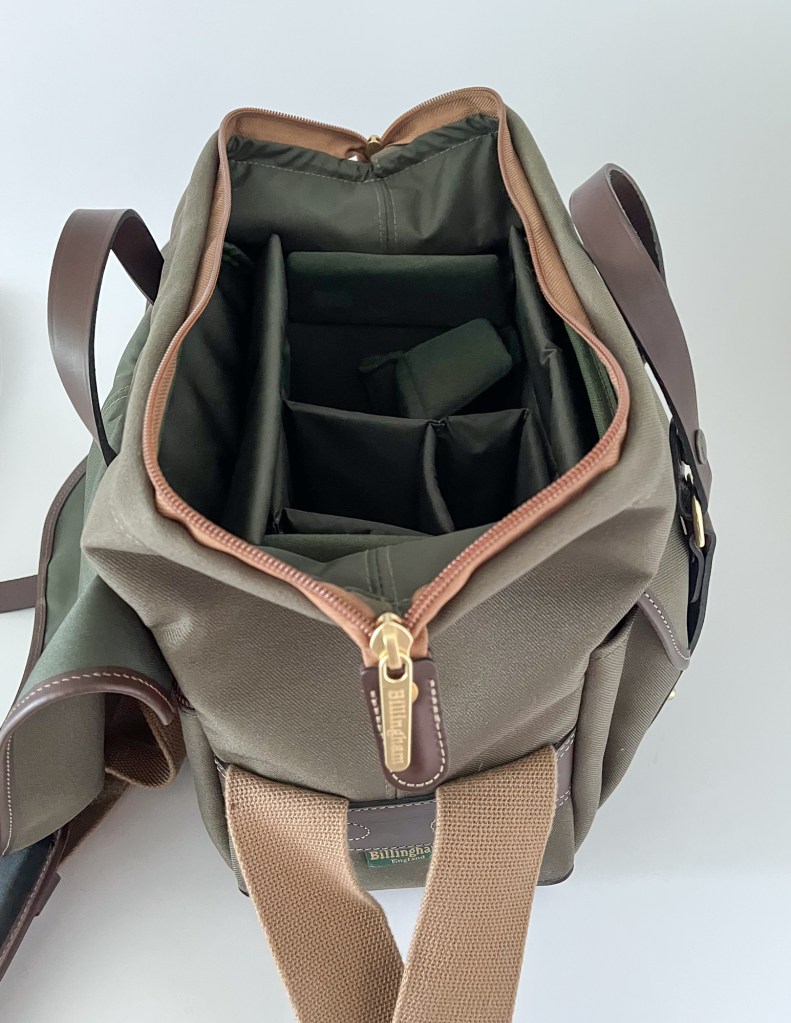
And this brings me to the title of this blog-post. Is this the perfect bag for the Hasselblad X-system? Well, this is of course very subjective. After some back-and-forth, I came up with an interior in my 207 that fitted my gear perfectly. For details, se pictures. Basically, a superflex divider and four extra single dividers cuts the interior into 6 more or less equally big compartments, 2×3 rows. The height of the dividers are chosen from the length of the lenses. One of these rooms will fit my XCD 35-75mm zoom with the X2D body mounted on top. That is a perfect fit for the height of the 207. The other rooms have been customized for the lenses: 21, 30, 90 and the Mamiya 645 105-210 with adapter mounted. The room under the right side of the camera body takes batteries, or even an extra lens when needed. In addition, there are padded rooms on all 4 sides outside of these 6 rooms that will fit a dustblower, cloth, batteries or filters. The two pockets on the outside front of the bag can be used for the charger and cables, or even a snack or a thin rain-jacket. There is also a rear zippered pocket, nice for documents, passport etc.

The bag can also be expanded with extra pockets. I have purchased two optional Delta end-pockets that can easily be fitted to the sides of the bag. This adds flexibility to bring an extra lens (the delta pockets are padded), some food, more filters, or even a rain-jacket. The pockets are made of the same materials and colors to match the bag nicely.

What about a laptop?
One important question I’ve been asked is concerning laptops. The 207 is too small to fit that. There is a padded compartment inside that will fit your 11-inch iPad. I have never gotten into the editing-on-a-tablet thing. I have found that the tablet-versions of Lightroom and Photoshop are still too limited. My solution to this is, as it always has been with all my carrying gear, to have a separate laptop bag. I have purchased the Billingham Thomas briefcase/laptop bag in the same color as my 207. That way, I can separate my computer-gear from my photography equipment, and I can bring my preferred 16” Macbook Pro. I see no purpose of carrying around a bag big enough for a laptop, charger, external harddrive etc. when I am in the field. That can be left on the hotel room or in the car. When traveling, I make sure to use airlines that allow a personal item in addition to a carry-on piece. The 207 goes as my carry-on and the laptop with extras goes in my Billingham Thomas under the seat as my personal item. However, if you want an all-in-one solution, the Billingham 307 and 335 will take a 13” laptop. The 445 and the 555 will take a 16” laptop.
…or a tripod?
I mostly carry my tripod in my hands when hiking, even with a backpack, so to me this is no issue. But the larger Billinghams do have a solution if you would like to strap your tripod to the bag. Two optional leather-straps (can be purchased separately) goes into slots in front of the bag (in the pictures these slots are hidden under the lid-straps) and you can strap your tripod horizontally here. A travel-tripod will fit nicely on the 207, but a larger tripod (like a Gitzo series 3 or similar) would probably affect the balance of the bag and look out of place.
Conclusions
As you may understand, I am very happy with my Billingham 207. I have now used this bag almost every day for close to a year, in all different conditions. It has taken very well care of my camera and lenses. The bag still looks flawless, like brand new. I have exposed it for extreme rain, high temperatures, low temperatures, snow, sand and dust and whatnot. I have used it in all kinds of situations and have newer been worried, not for my bag and not for my gear inside of it. It is very comfortable to carry. If I fill it completely, side-pockets and everything, it is of course heavy, but the strap is extremely good. This bag comes highly recommended if you have the Hasselblad X-system, and probably for most other camera systems as well.
You can read more about Billingham on their website: Billingham.co.uk
 LANDSCAPEPHOTOGRAPHY ETC.