The recent introduction of two tilt-shift lenses for the Fuji GFX-system actualizes the question of how to apply these techniques for us Hasselblad X-users. Will Hasselblad ever make a dedicated tilt-shift XCD-lens? Will we see an XTS, a version of the HTS-adapter? So far, we are left in the dark. But that doesn’t mean we have no tilt-shift options for Hasselblad X.
The use of movements has been around since the very early days of photography. This technique is solidly anchored in large format film-photography, using bellow-cameras with front- and back standards that can be moved independently from each other both sideways, up-down and in angle. The technique became available also for smaller format cameras with the introduction of special lenses (with similar, albeit somewhat restricted functions) in the early sixties. I believe Nikon introduced their first shift-lens in 1962, and Canon came out with similar optics from 1973.
If you’re reading this, my guess is that you are fairly acquainted with what tilt- and shift techniques are. The purpose of this post is not to give a full technical overview of movements, but a short introduction may be pertinent. At least it reveals my limited knowledge of the subject. LOL. Tilt-shift systems are characterized by lenses that produce a much larger image-circle than the size of the sensor/film. This way, the lens and thus the image circle can be moved around relative to the sensor, producing different movement effects.
In short, tilt angles the lens to alter the focus plane. E.g. the focus plane can be tilted forward to produce an in-focus wedge from foreground to infinity. There are several restrictions to this technique. Focus is cumbersome (in my opinion) and outside of the wedge of sharp focus, things are unsharp, e.g. branches towards the top of the frame.
Shift displaces a large image-circle produced by the lens up, down or sideways in relation to the sensor (or film). This way, a camera can be set level and the lens can be shifted to include areas otherwise outside of the image-circle. A level camera means straight verticals, thus avoiding e.g. converging vertical lines seen with a camera tilted upwards. Typically used in architectural photography, where the top of buildings can be included without pointing the camera upwards, thus avoiding the impression of the buildings leaning backwards. Furthermore, shift can be used to exploit the inherent distortions in a lens. A classic use in landscapephotography is to tilt the camera upwards and then shift the lens down to get the framing you want. This enlarges the foreground and give more depth to the image.
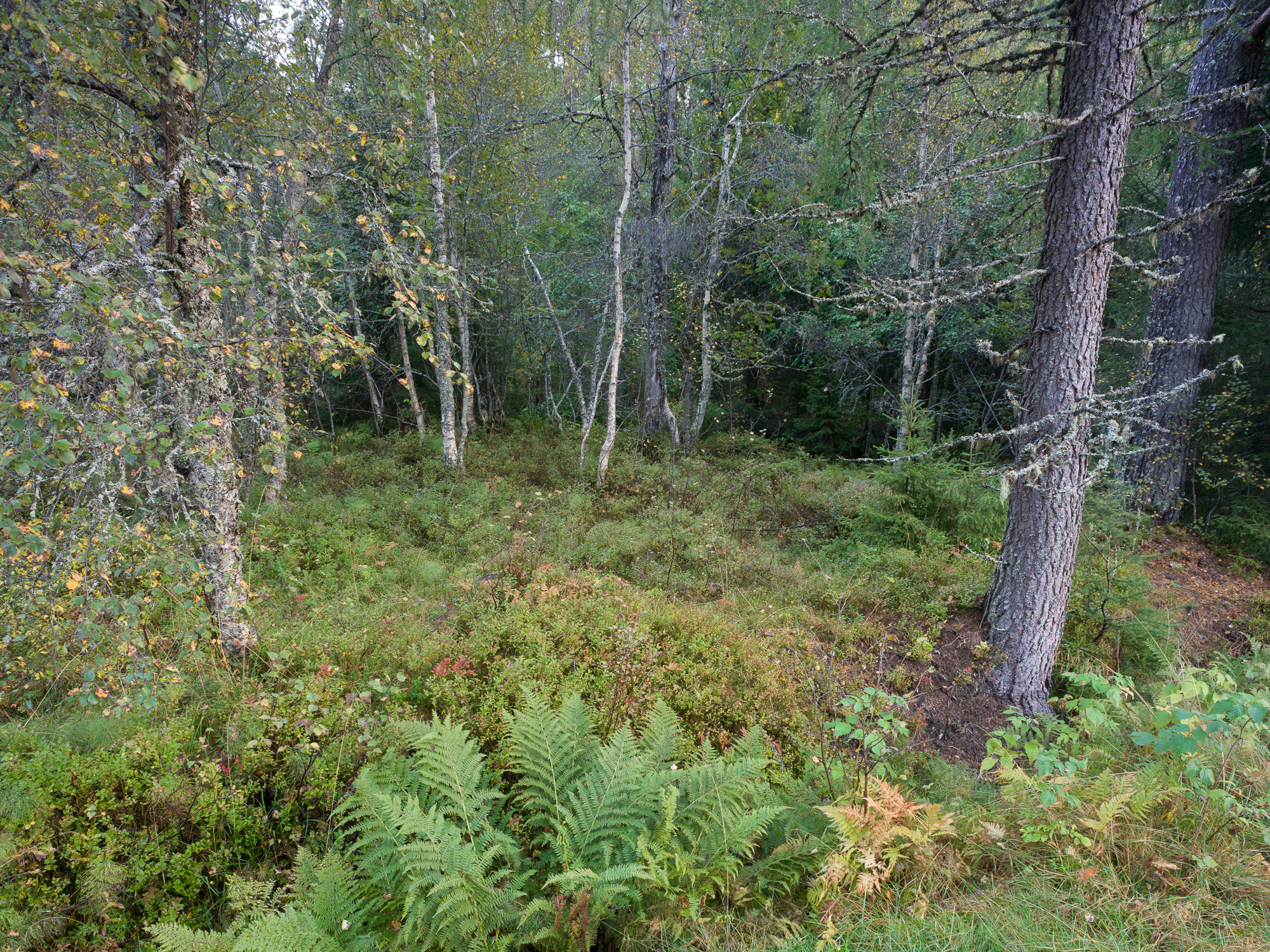
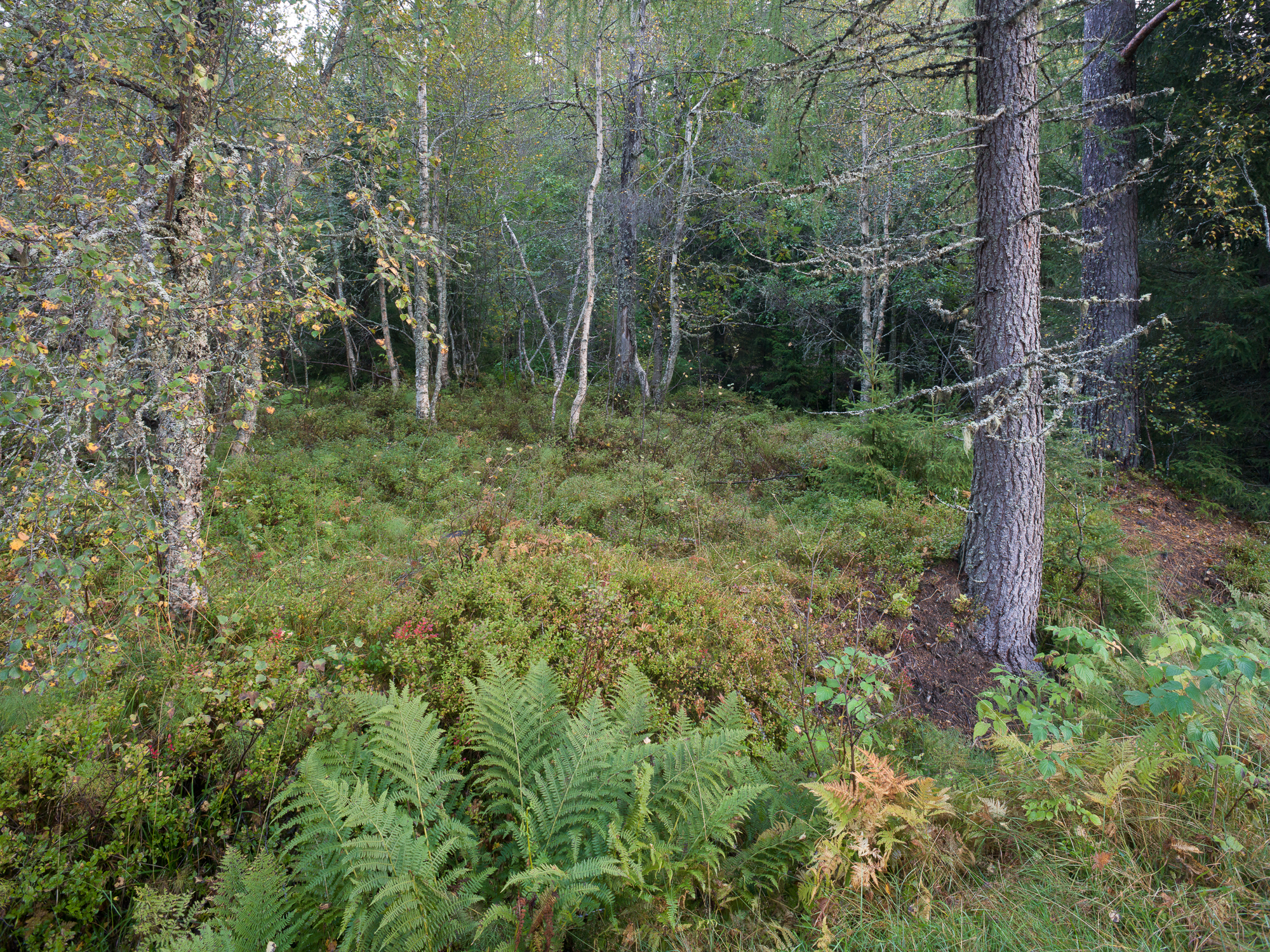
Both tilt and shift can be mimicked on digital files in postproduction. Focus-stacking can provide us with an image that is tack sharp from front to back. Implementation of automated exposures for focus stacking in camera and software like e.g. Helicon focus, can give great results with minimal efforts. Software can also give excellent perspective correction. Some think that this obsoletes the need for shift. Personally, I find shift to be an interesting function that is often convenient for more intimate scenes and is really rewarding to play around with. I use it in particular in my forest-photography to provide depth with a foreground and at the same time keeping the vertical threes from bending outwards. I also employ it often in my cityscapes, to assure true vertical buildings.
Hasselblad has a proud history of tilt- and shift equipment, with both the flexbody and the Hasselblad HTS for the now discontinued H-system. For the X-system, there are basically four options to get tilt and shift: 1) You can use the HTS and H-optics with a XH adapter- or converter, 2) you can mount the X-body to a technical camera, 3) you can adapt third-party tilt-shift lenses or 4) you can adapt regular third-party lenses with a large image-circle (typically older medium format lenses) and use a tilt-shift adapter. I have tried all these techniques, but have concluded that, for me, adapting dedicated full-frame tilt-shift lenses provides the best compromise for portability, price, usability and image-quality.
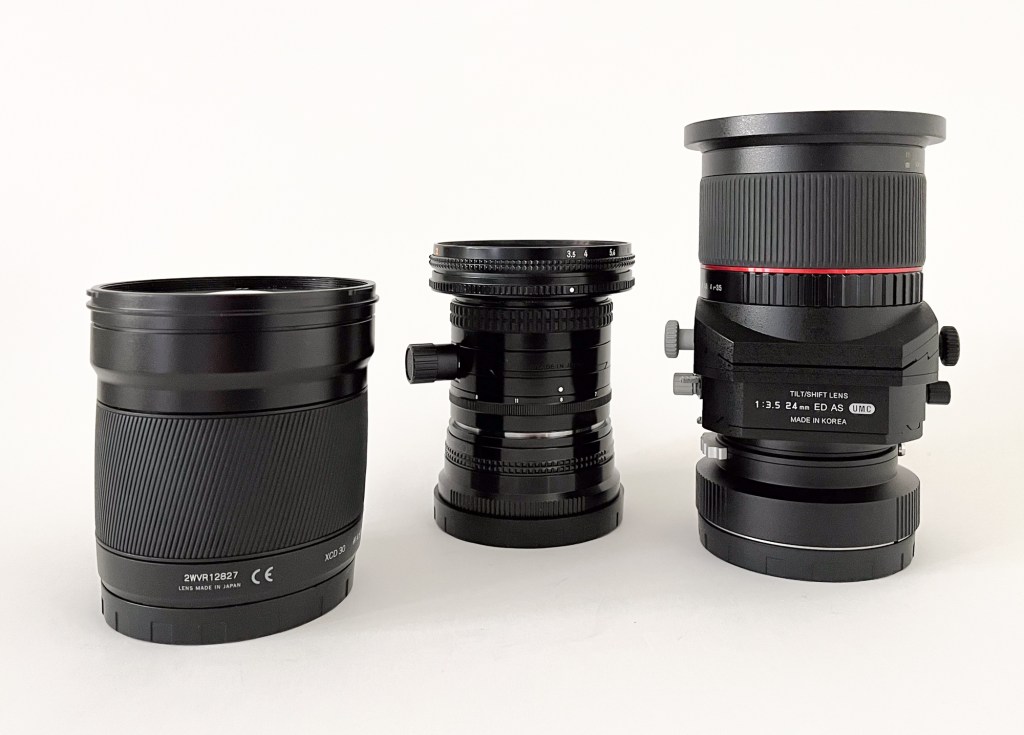
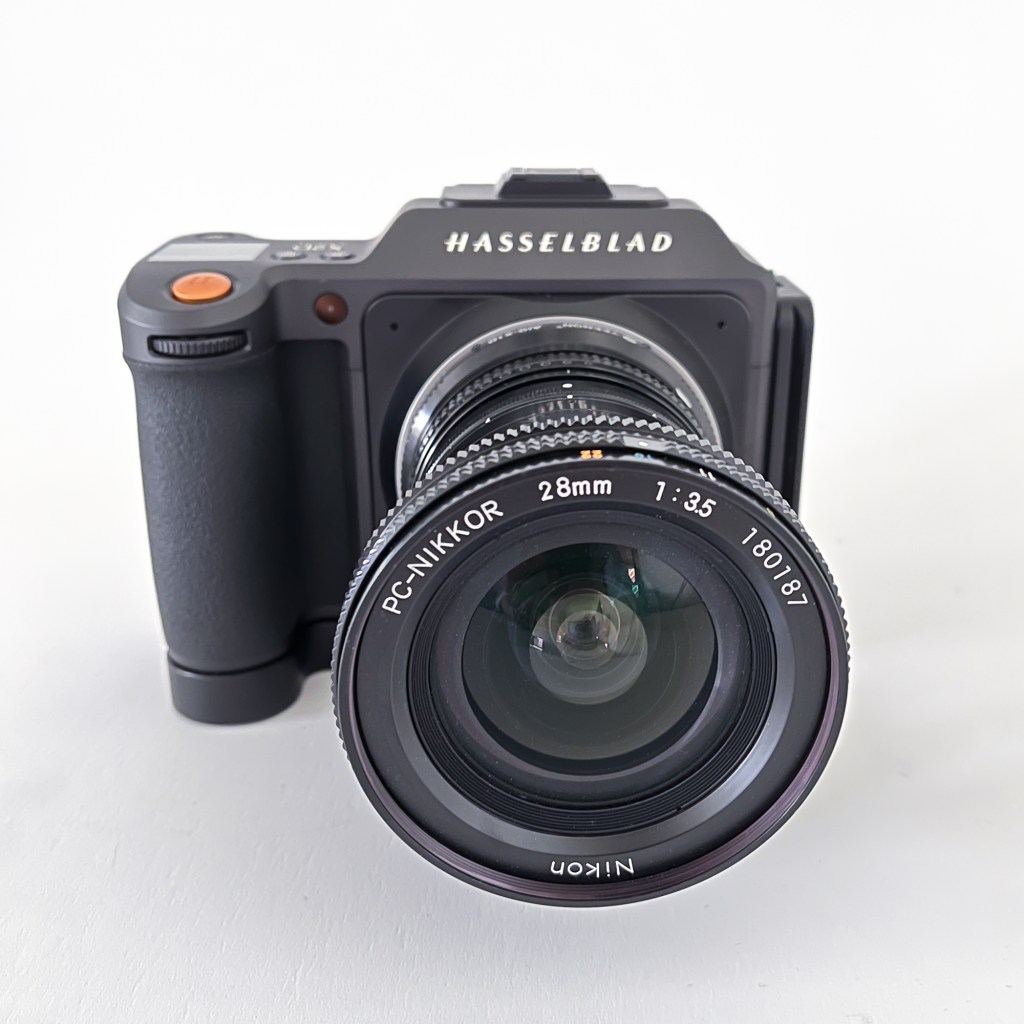
So- what tilt-shift lenses can be adapted to Hasselblad X? I know many photographers prefer the Canon versions and from what I have seen they produce great results. I have no personal experience with them. As a long-time Nikon user I own a couple of lenses that could be used, specifically the PC-Nikkor 28mm and the Samyang/Rokinon 24mm. I have used both of these adapted to my Hasselblad with ok results. I will come back with field-tests of both. For longer focal-lengths, I have adapted my HTS and different HC/HCD lenses with very good technically results. However, I find the adapted HTS to be cumbersome to use on the X-system. The setup is front-heavy and difficult to handle. Furthermore, the HTS is a 1.5 converter, meaning that with the HCD 28mm mounted, you effectively have 43mm tilt-shift lens. That my be ok under some circumstances, but it makes the HTS far from a universal, perfect tilt-shift system.
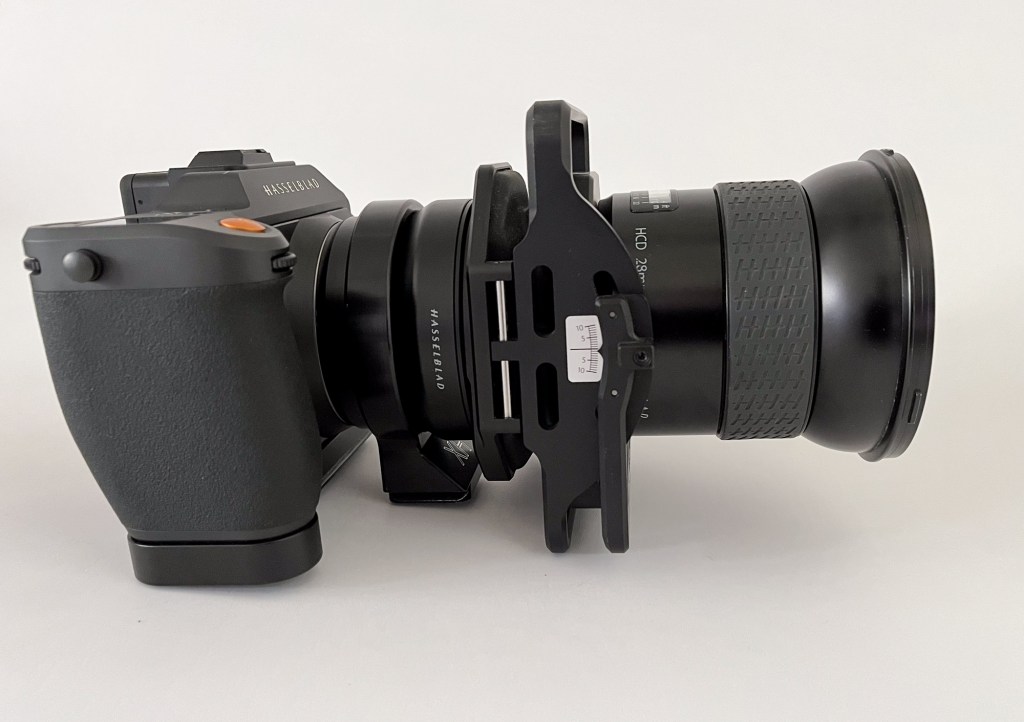
My hope is that Hasselblad will come up with a couple of dedicated tilt-shift lenses in the near future. A 28mm and a 45mm? We can always hope. I’ll put it right next to a XCD 20-35mm wide-angle zoom on my wish-list. An alternative would be an XTS, but the converter (to make a bigger image circle) may render it a limited alternative, as the HTS was for the H-system.
I will be back shortly with field-tests of my two mostly employed tilt-shift options, the adapted PC-Nikkor 28mm and the adapted Samyang/Rokinon 24mm tilt-shift.
 LANDSCAPEPHOTOGRAPHY ETC.