Rumors say that Mahatma Gandhi once was asked what he thought about western culture and civilization. Known for his quick and sharp tongue, he allegedly replied: “Oh, that would be a good idea!”. Whether he actually said that is debated, but the quote really puts Western arrogance into perspective.
Being a history nerd myself, I have studied different civilizations through the years. Both through books and visits. I have been fortunate to see many historical places and countries with old and proud cultures. But nothing could prepare me for Angkor.
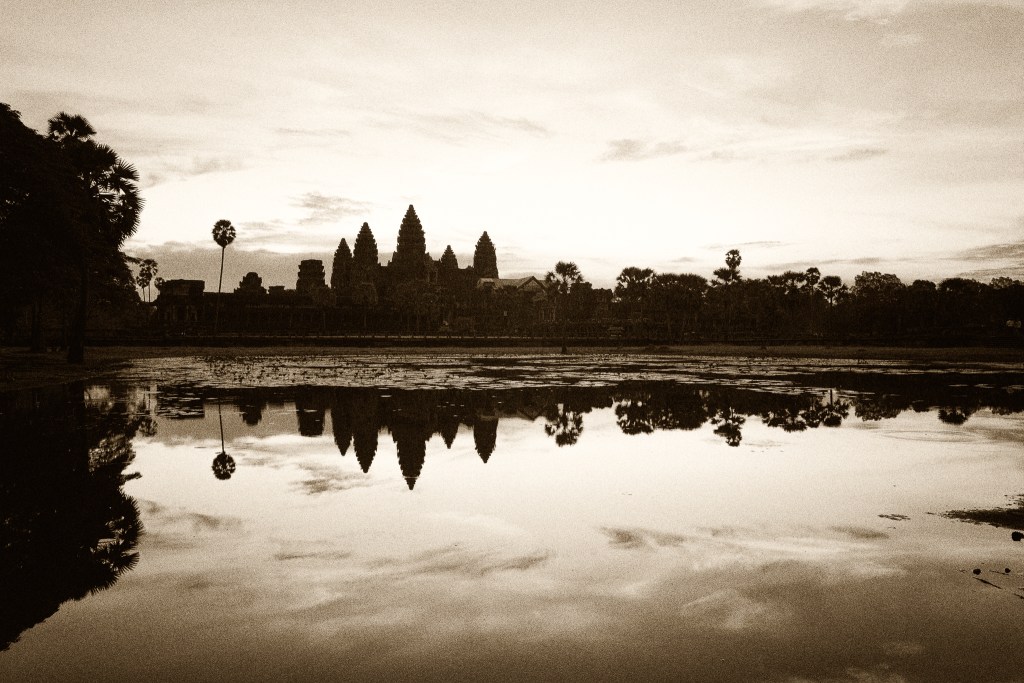
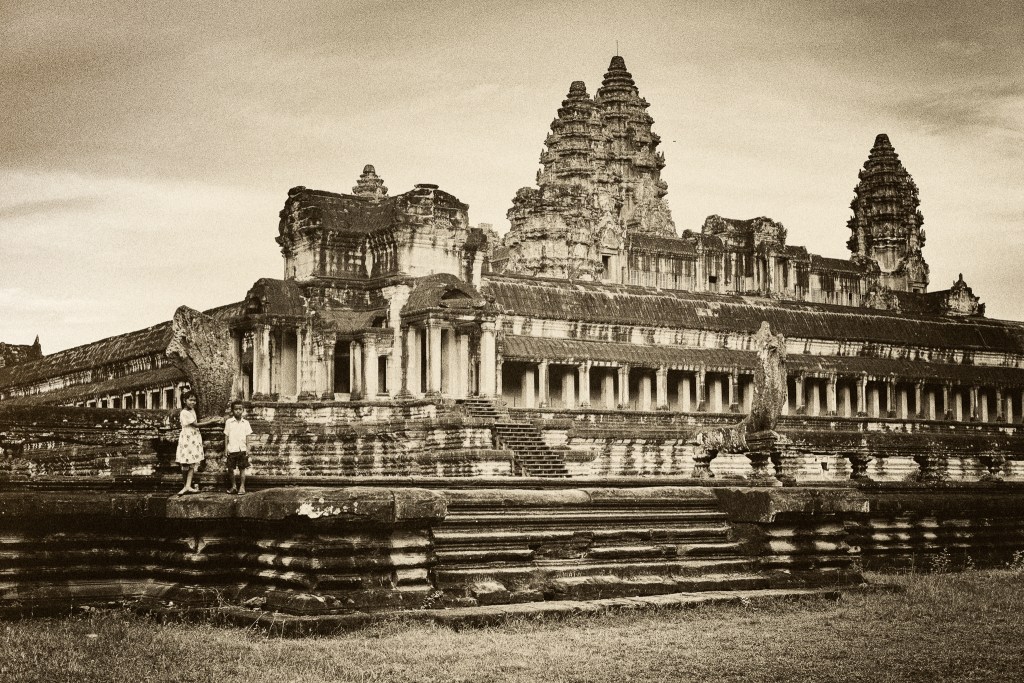
The impact this enormous, ancient complex had on me is hard to describe. I won’t even try. Enough to say that while we in Europe were busy starving, chopping each other’s heads off and heading into dark, medieval times, this enormous complex and civilization flourished from around 800 AD. 6-700 years before Columbus headed west. A few facts to put it into perspective: The Angkor complex consists of at least 72 major temples, and many, many smaller ones. Some probably yet to be “discovered” and excavated. Angkor Wat is the largest and best know. It has been in continuous use as a temple since the 1100’s, and is still today the largest religious building in the world. The complex probably hosted the largest pre-industrial metropolitan area on the planet, and was home to an estimated one million people. The whole area is built with stunning engineering and craft, way surpassing what we were able to build in Europe at the time. Eg. it is supported by a huge intricate irrigation system, including several enormous man-made lakes. This place is like nothing else. The first recorded western visitor is said to be a Portuguese explorer sometimes in the 16th century. Although some parts of Angkor have been in continuous use since ancient times, most temples have been abandoned and left to the jungle.
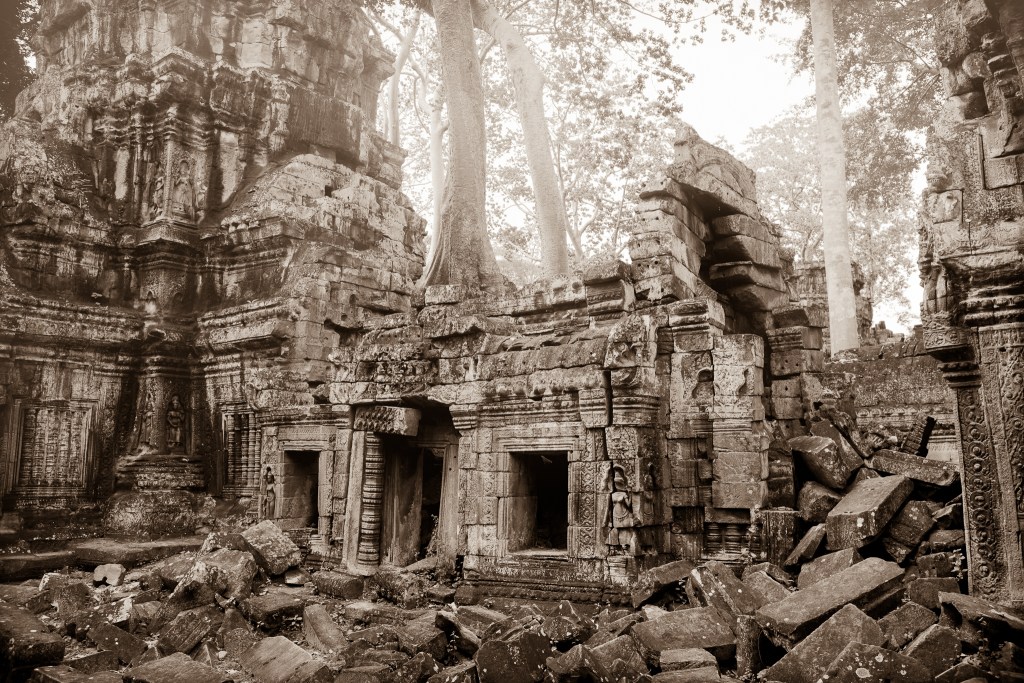
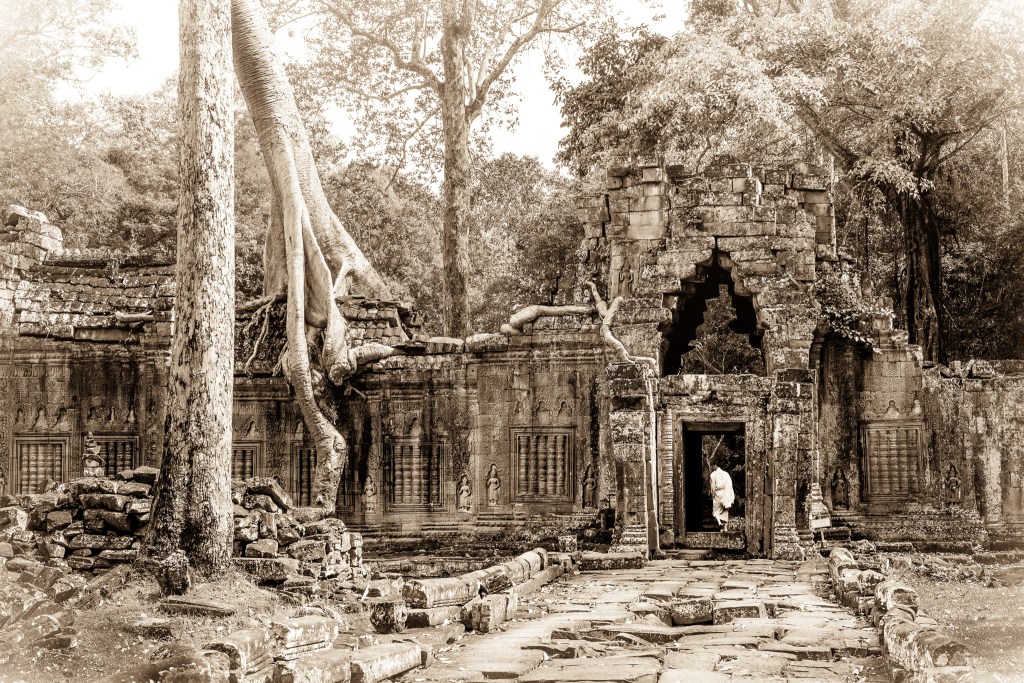
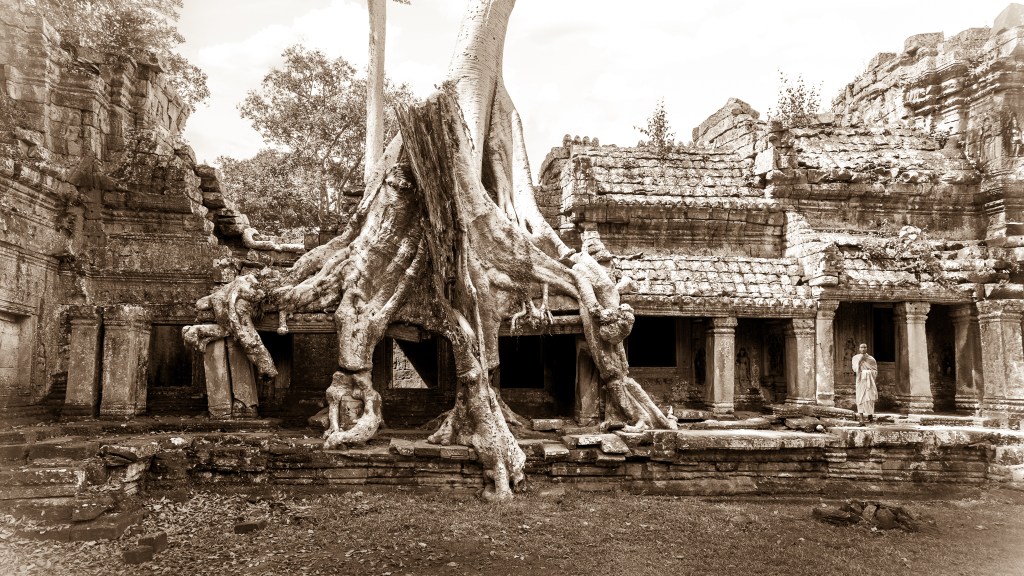
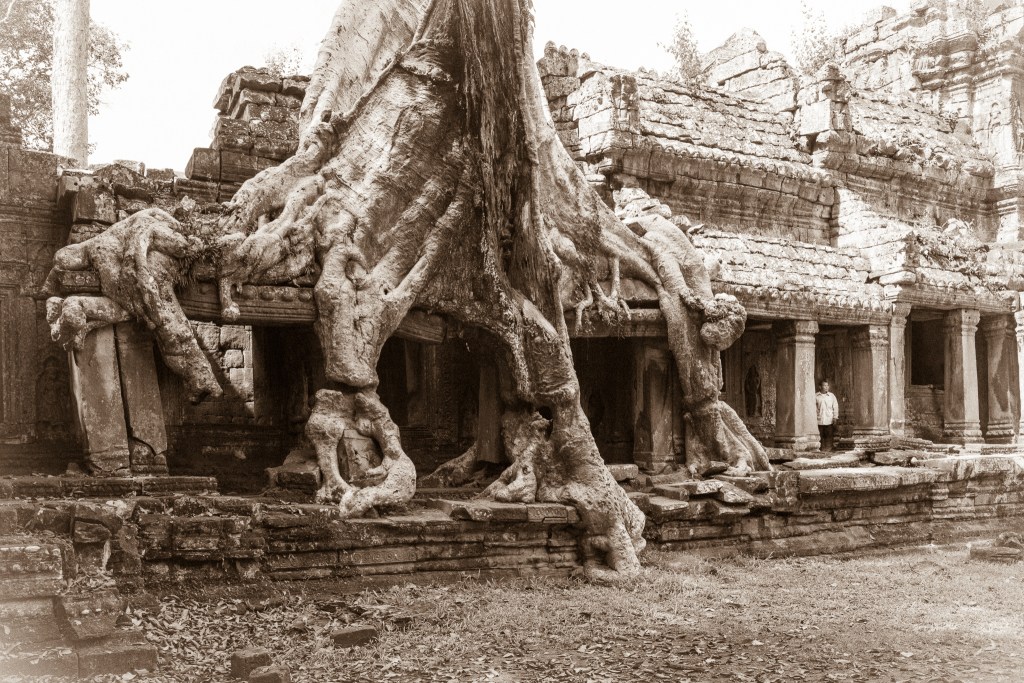
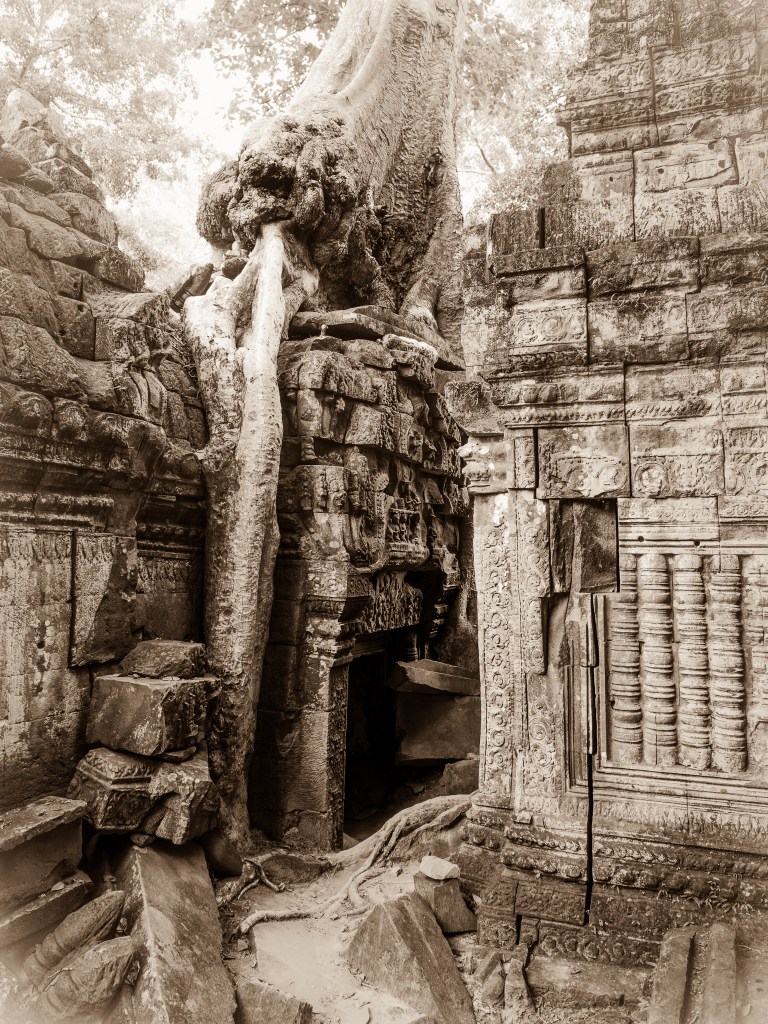
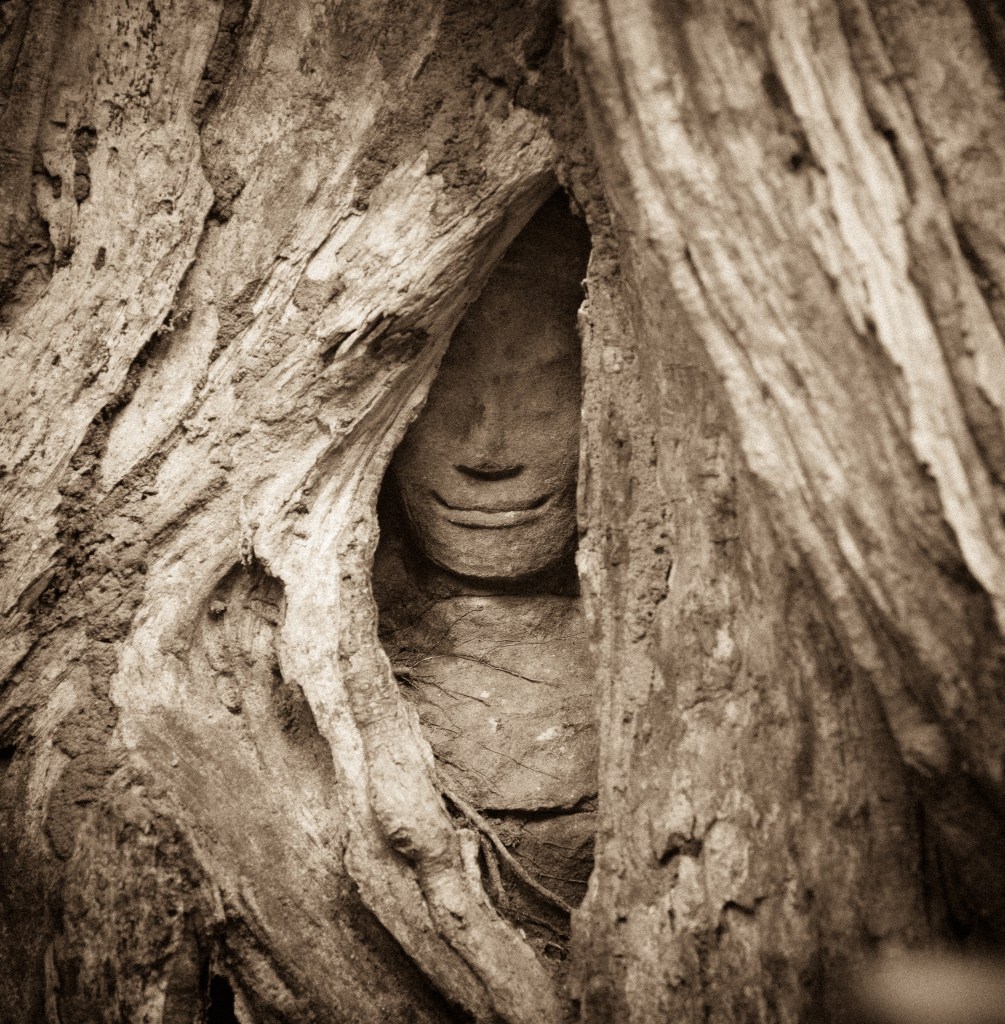
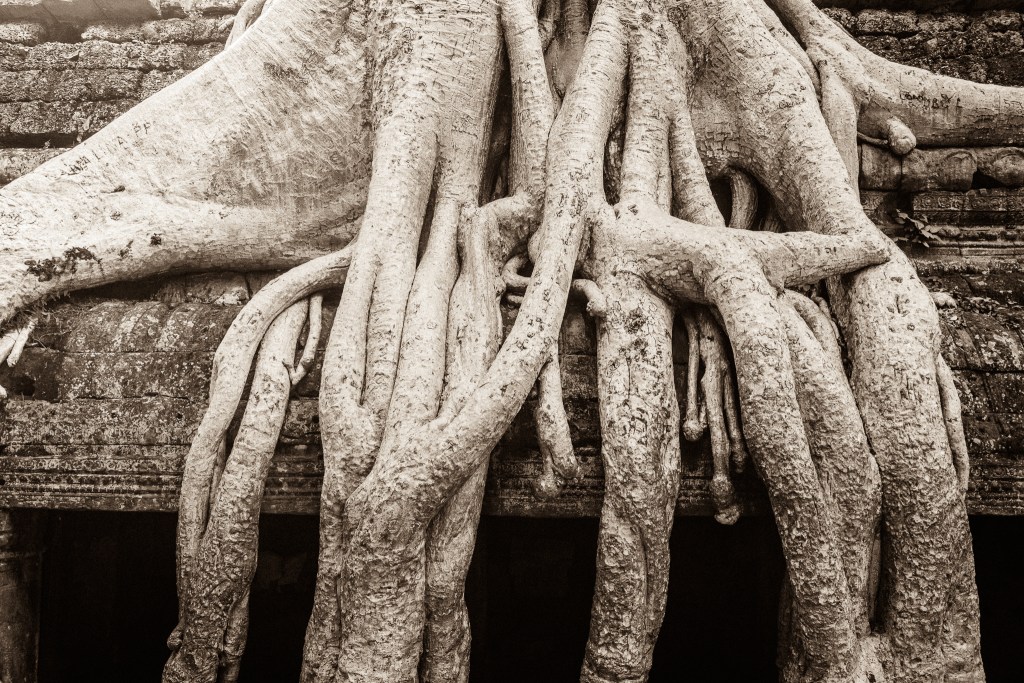
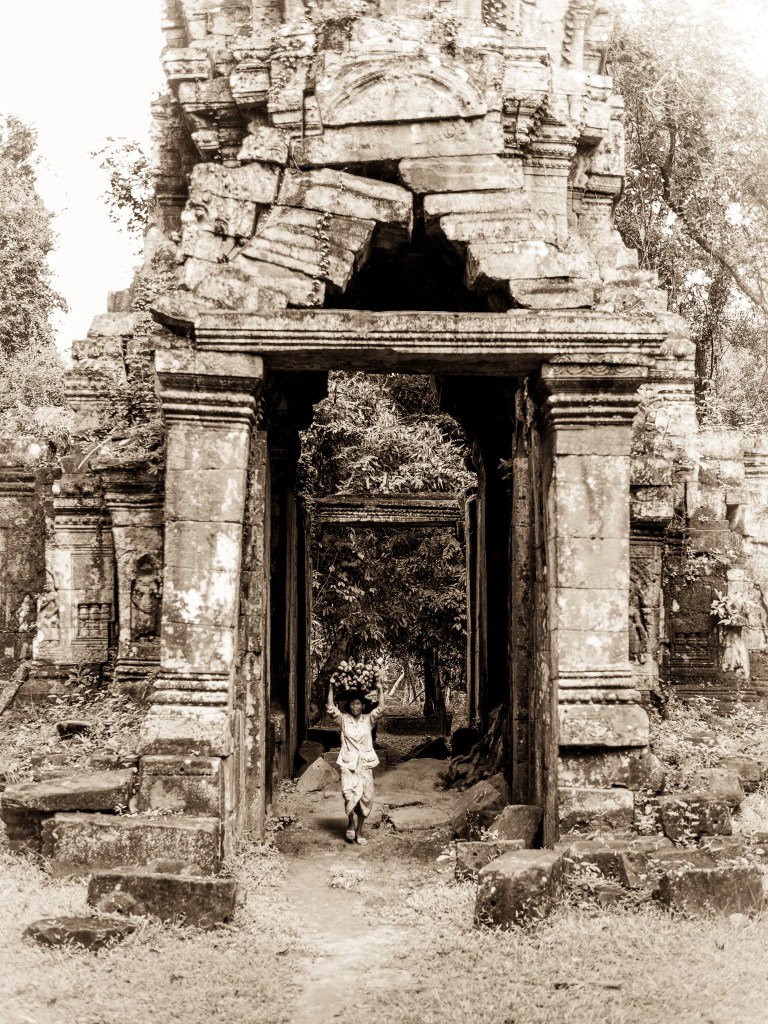
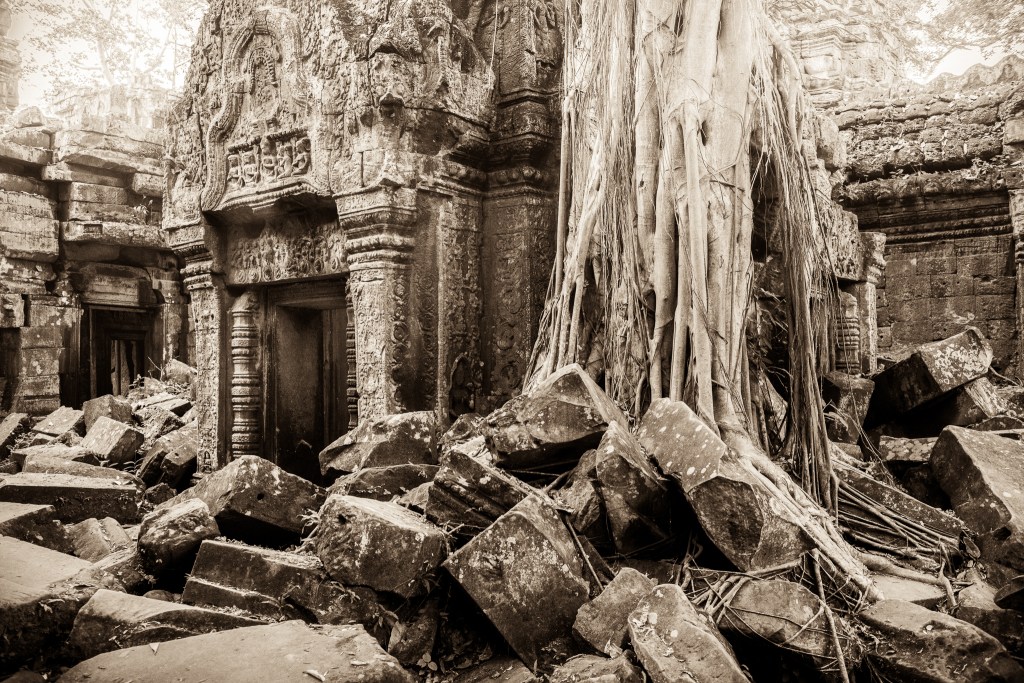
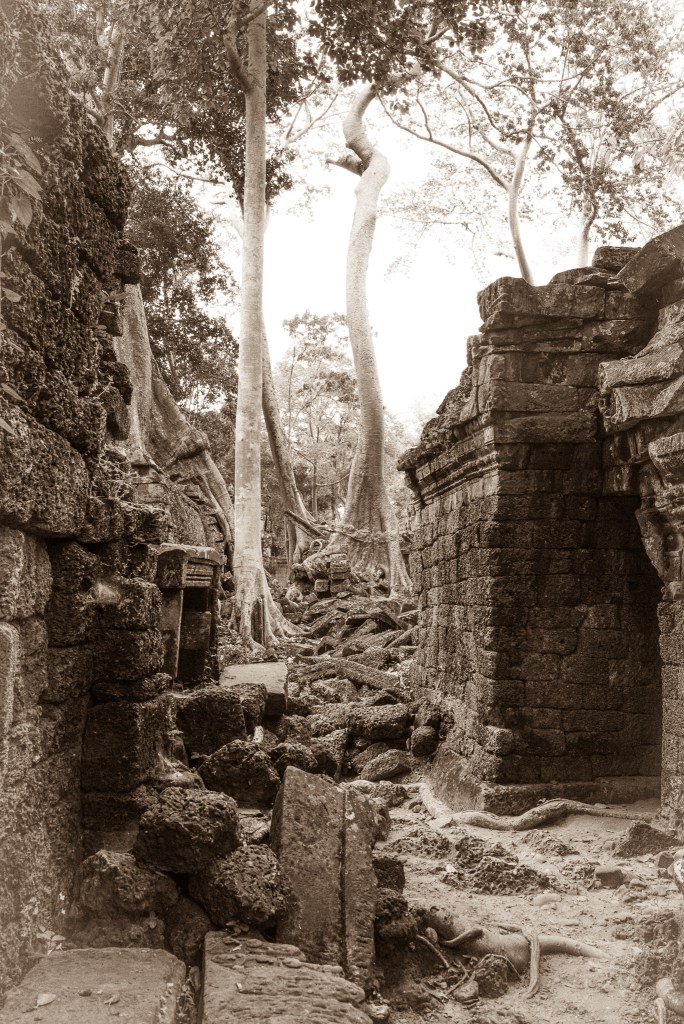
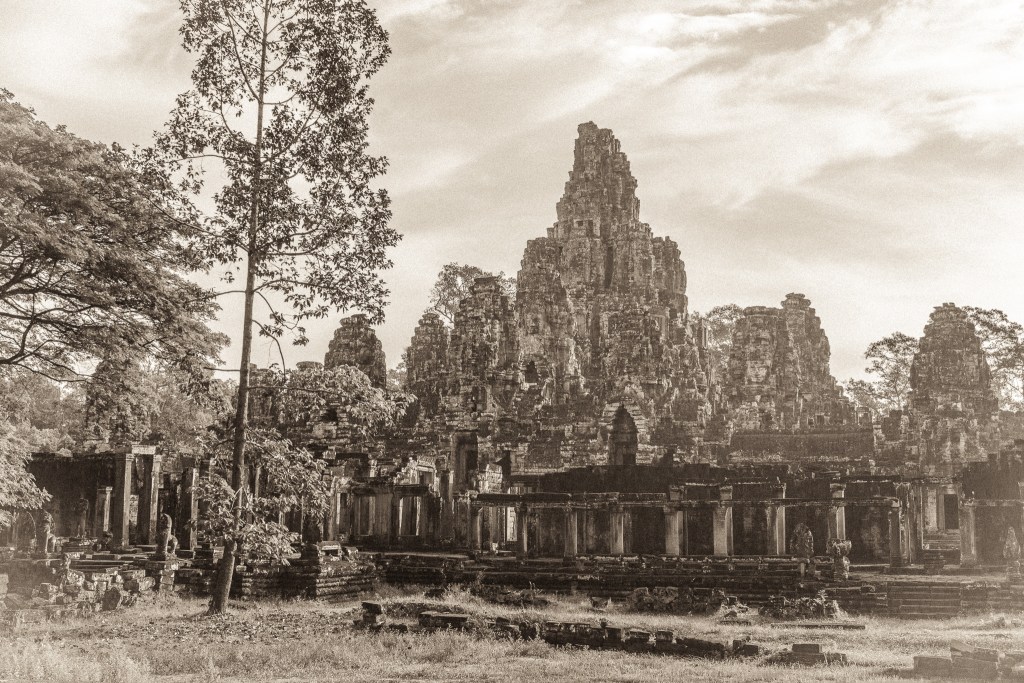
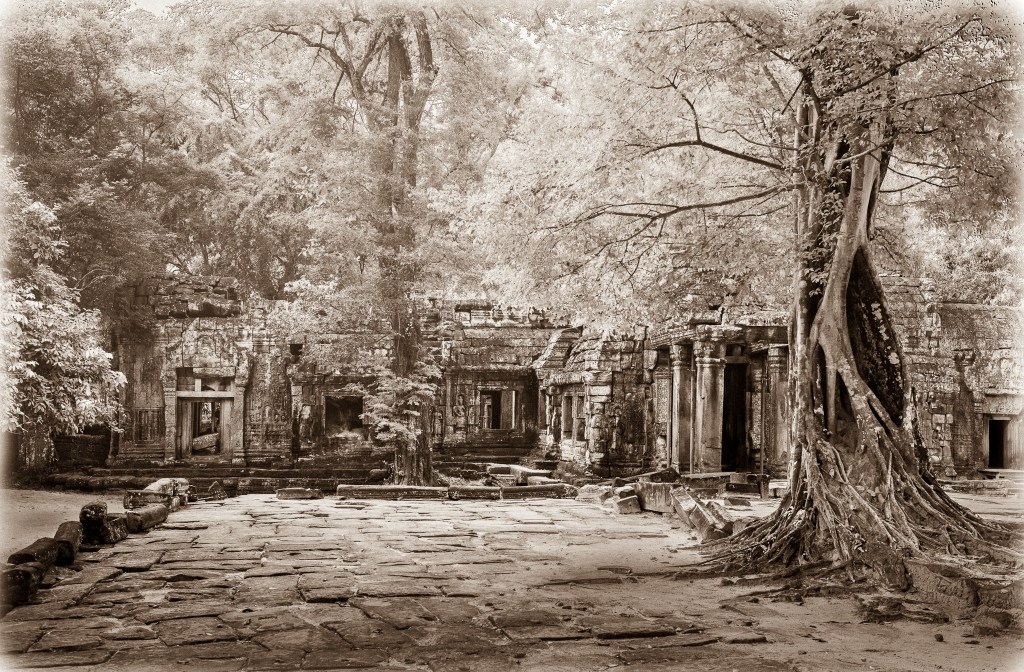
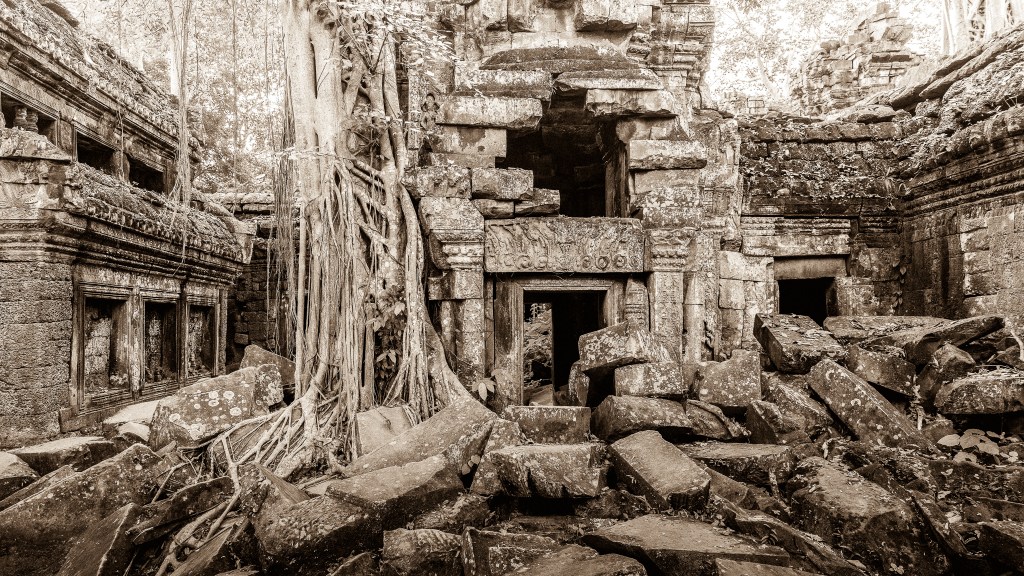
Back in 2012, a photography-buddy and I decided to visit Cambodia, and the Angkor complex in particular, for photography. We planned to stay a couple of days in Siem Reap and booked a local photography guide and driver. Having seen some really interesting footage from Angkor before, we had a few ideas about how to approach the area as landscape photographers. Fortunately, our guides led us through these days in an outstanding way. They knew the best locations and times, and took us to a few temples that turned out to be amazing: Bantea Shrei, Angkor Thom and especially Ta Phrom. The ruins, the Banyan trees growing on them, the mist in the hot humid air, everything gave a unique and unforgettable experience. And I must say that the people in Cambodia, the Khmers inhabiting this area, is the friendlies people I have ever met. This visit left me with unforgettable memories.
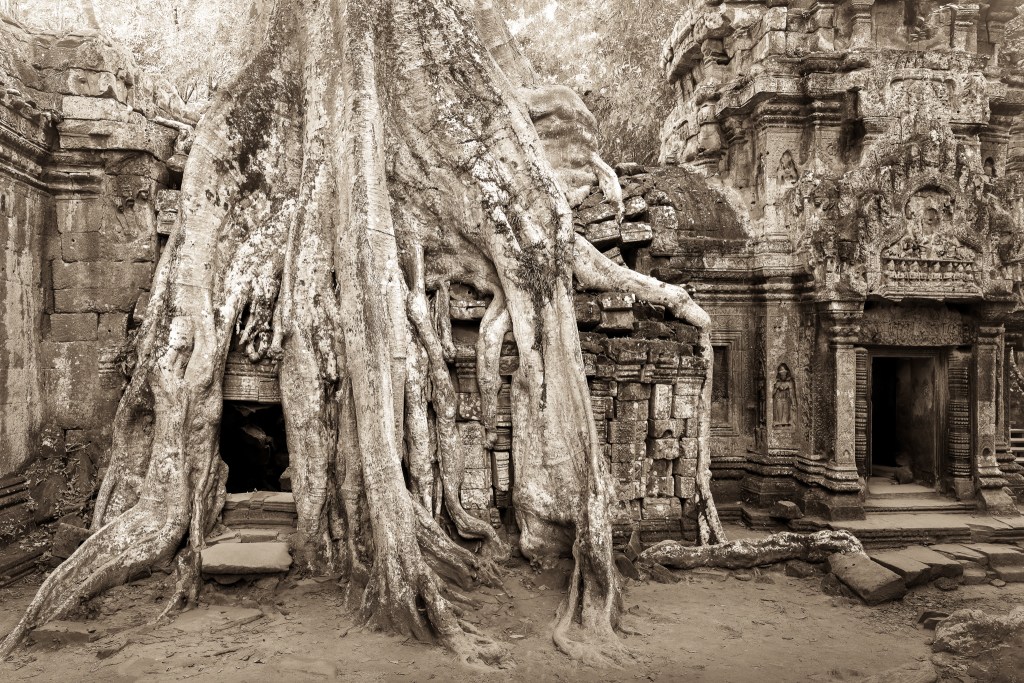
I got away with tons of photos, for which I obviously had high hopes. Processing them after arriving back home, I struggled with translating how magical this place is. A few of the images touched into something and turned out ok.. I have had 3 or 4 of them in my portfolio for years, printed them and shared them on social media. But for some reason I was never really happy with the results. They didn’t give me the proper sense-of-place. If you’re a photographer, you probably know what I mean. Through the years I have tried different things in postprocessing, including turning them into black and white. I think I came closest to something with sepia-toning, making them look like something from the early 1900’s. But that style didn’t fit into the rest of my work then and I have put it aside for years.
Now that I have a new website and a different portfolio structure, I figured it was time to make something out of these images again. I often browse other photographers homepages, as I appreciate diving into different styles and pick other creative’s minds. This Christmas I visited, as I often do, the homepage of Guy Tal. He has a portfolio called “Journal Sketches”. Wonderful B&W images with a slight warm tone, resembling, (exactly!) old journal sketches from travels in earlier days. I immediately connected this with my own attempts on sepia-toning my Angkor-portfolio and decided to give them a new try.
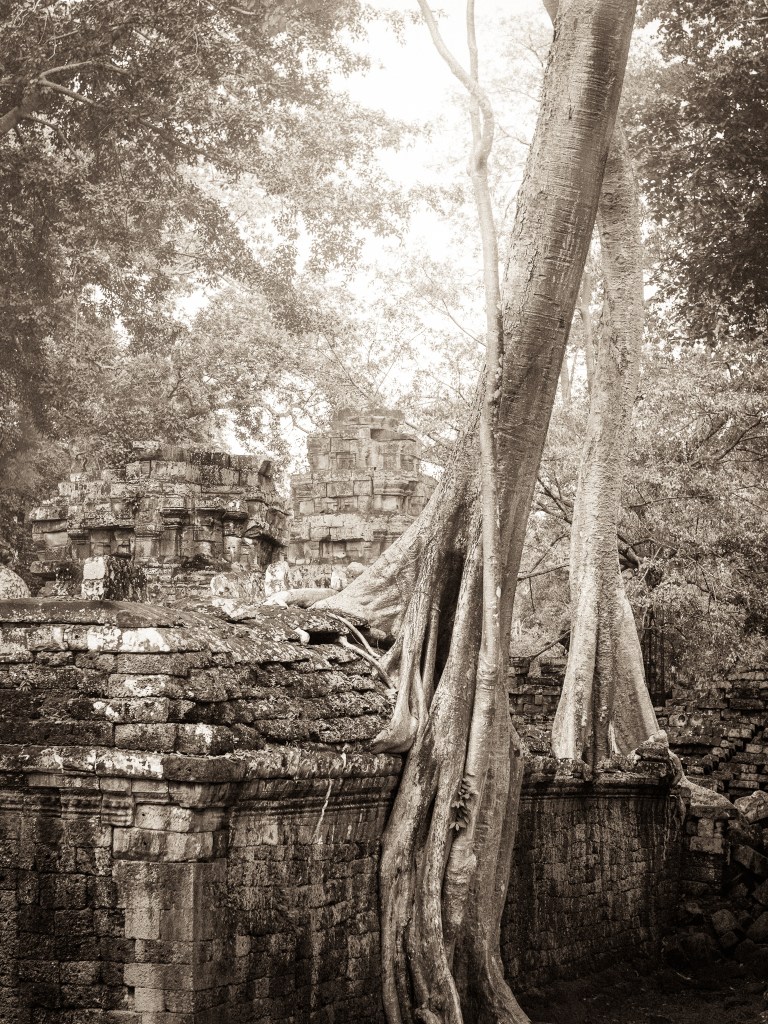
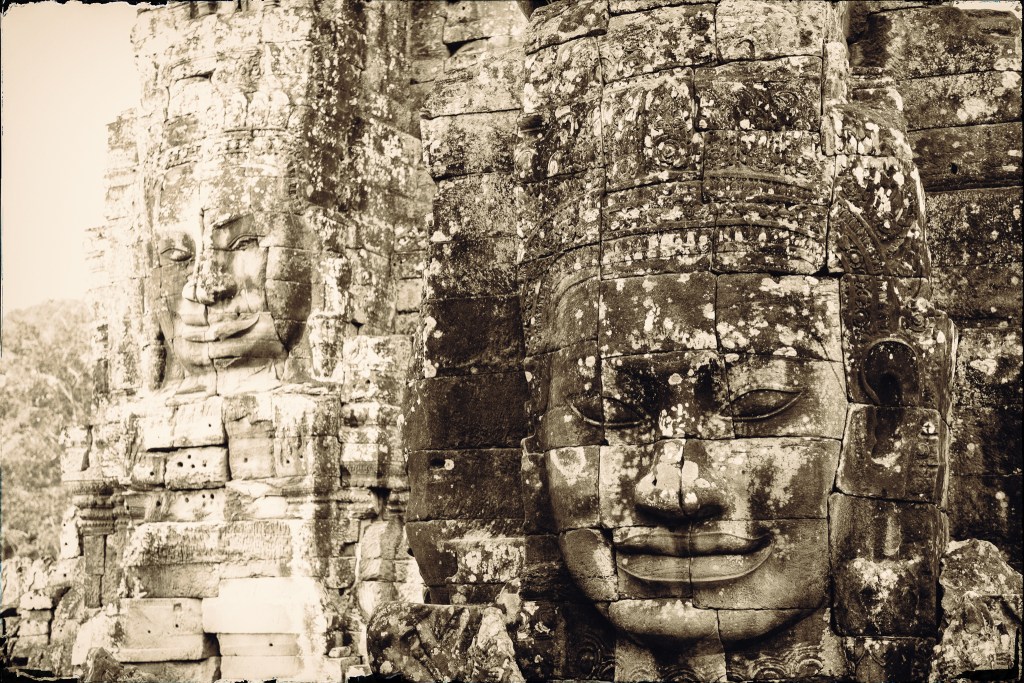
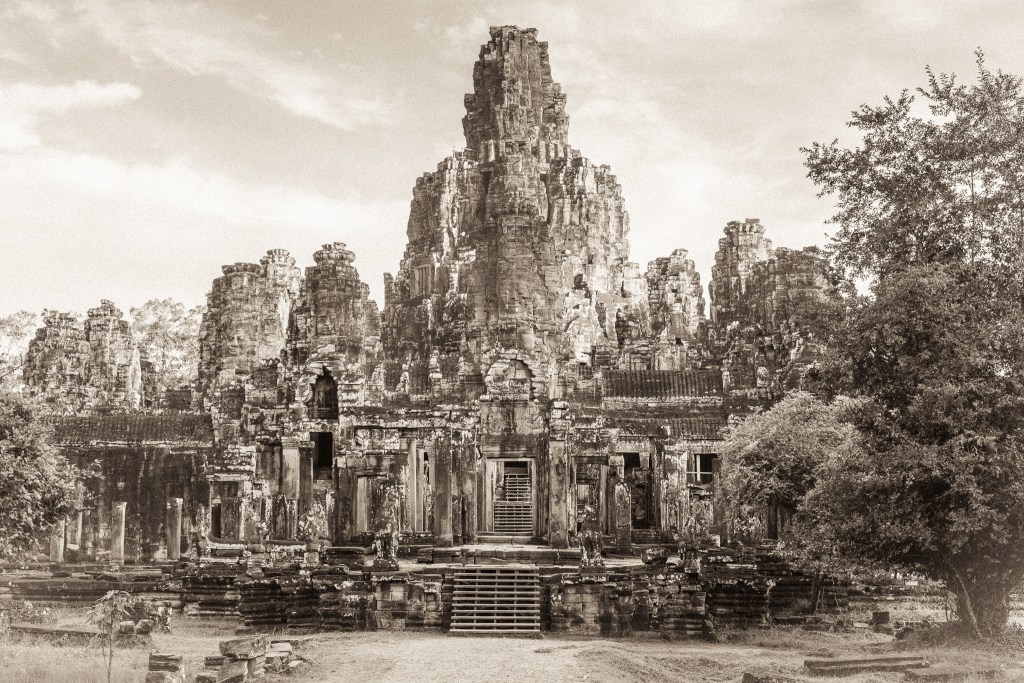
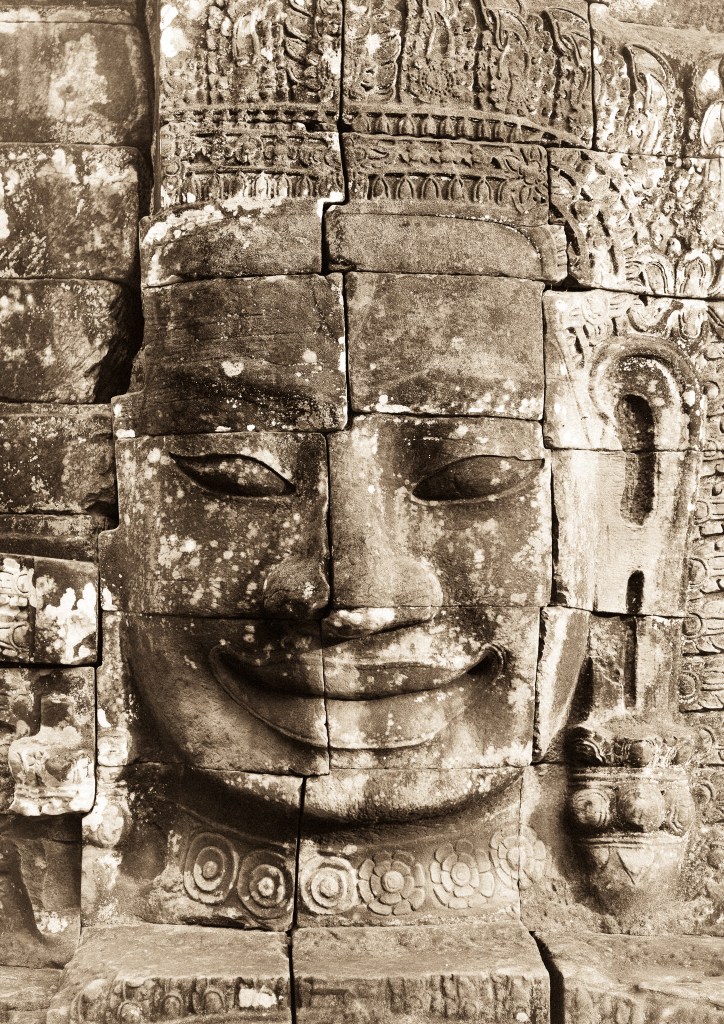
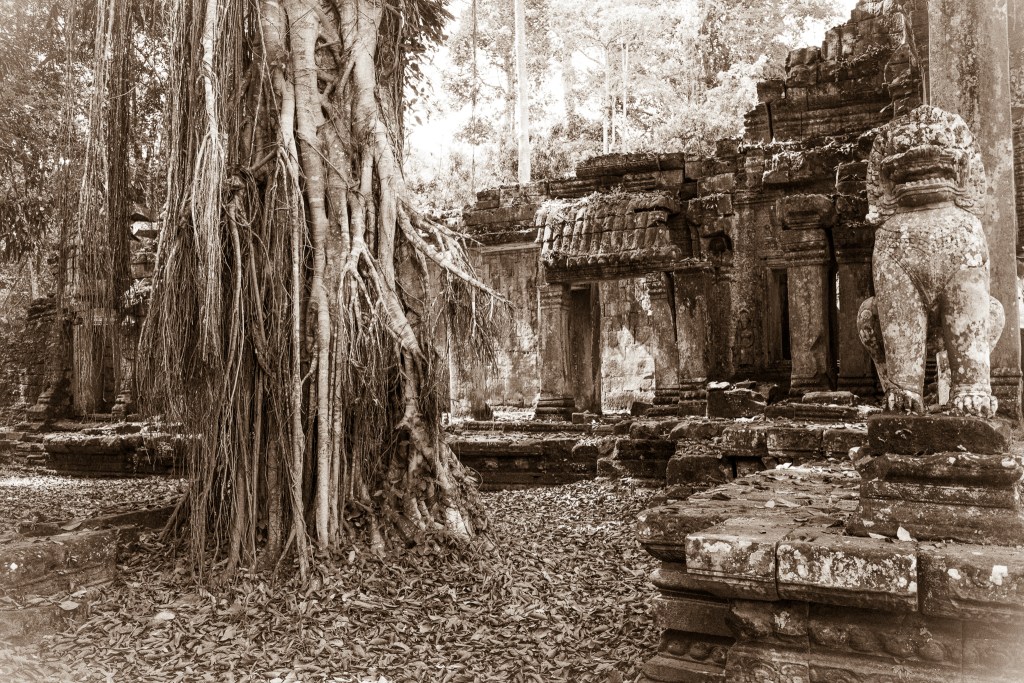
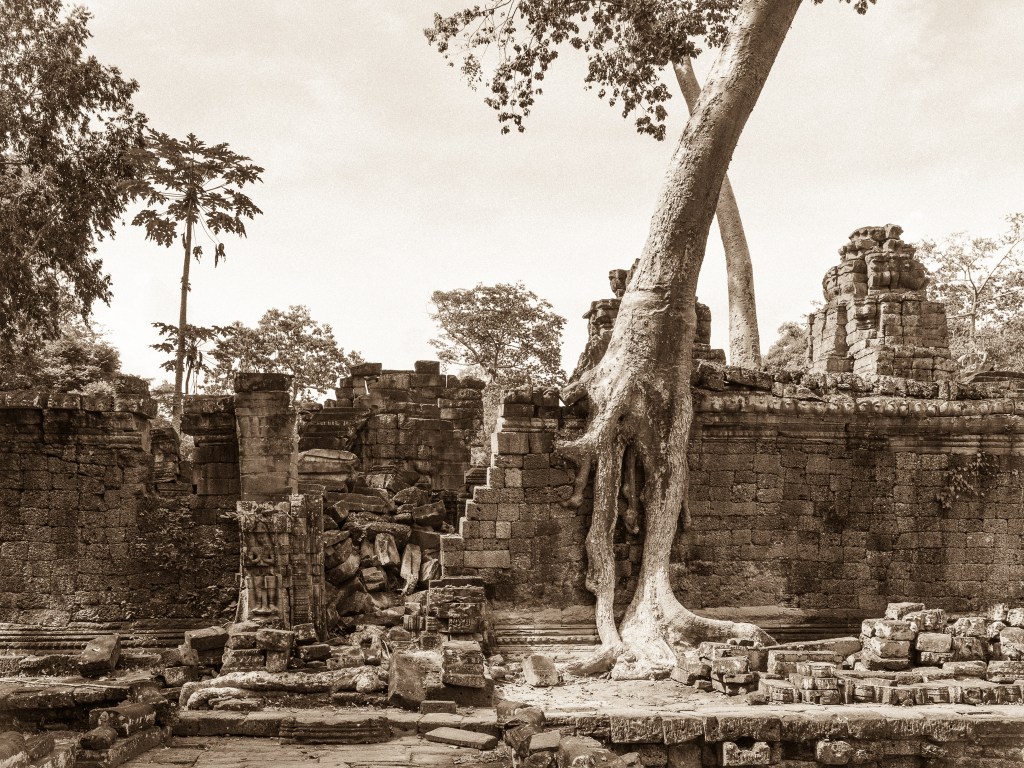
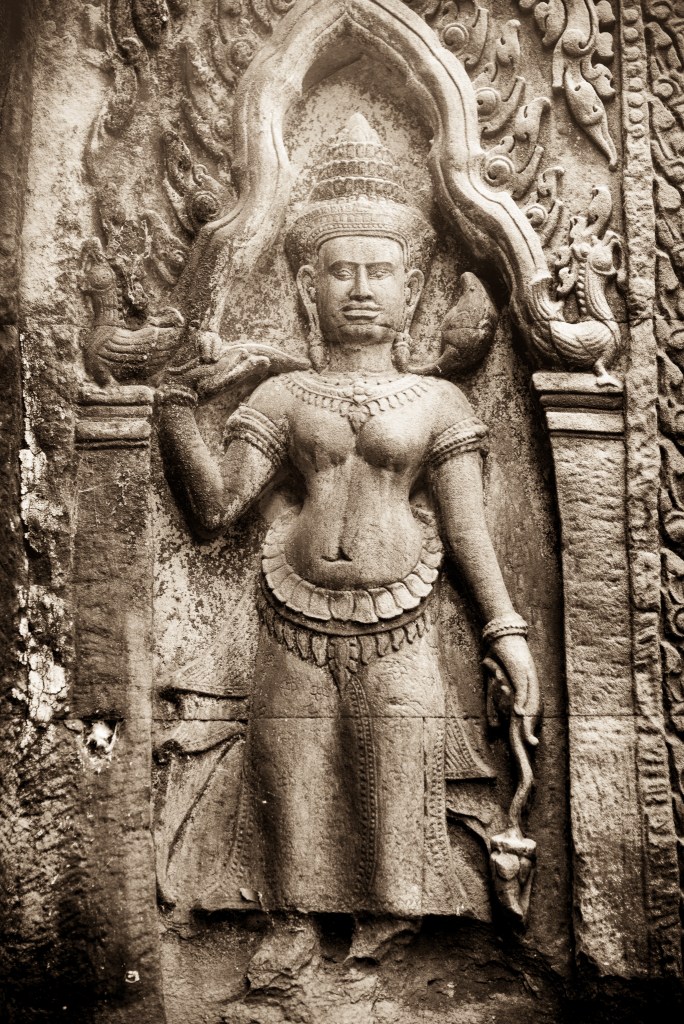
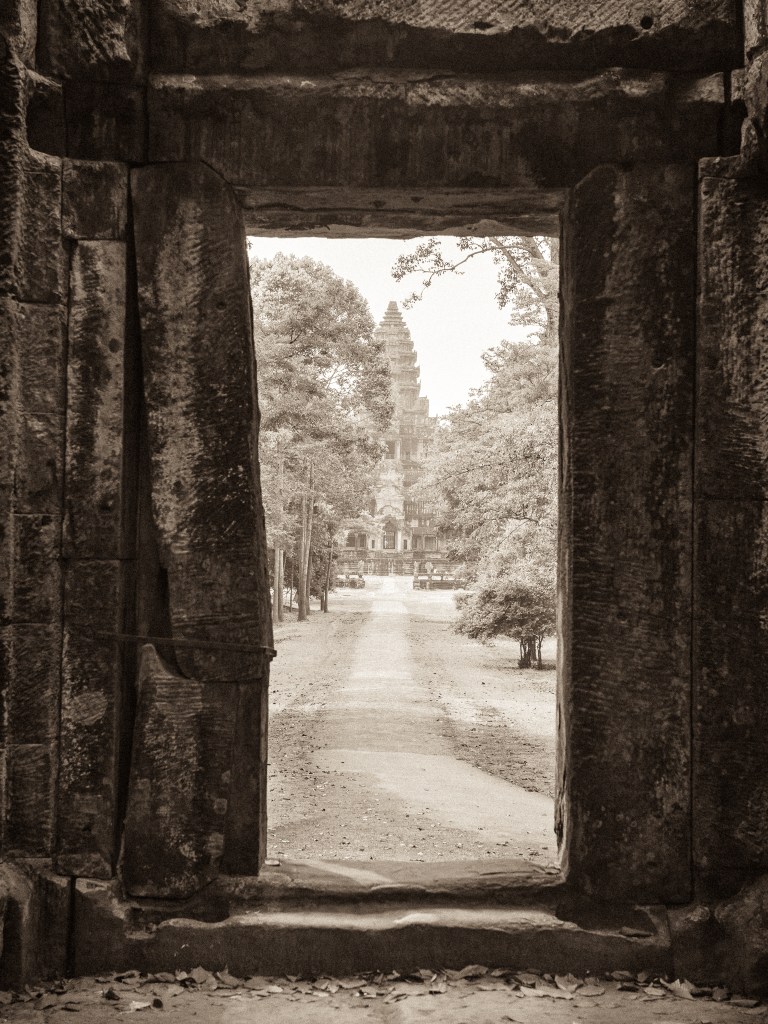
A new thorough sorting process of the raw files, picking up the most interesting compositions, followed. I was left with 30-ish images that I then ran through a custom-made preset: B&W conversion, toning with color-grading, bringing up highlights and contrast. All to emulate a feeling of travel and discovery from times long gone. The “Journal sketches” from Guy Tal’s portfolio was in the back of my head, but I got a bit creative and simulated some light-leak and grain to add to the historic feeling. Individual processing followed, adjusting minor details in all of the images before I felt satisfied with the result.
Some might claim I have gone over the top with the processing here, and that’s ok. I like it and it makes me feel I’m back there again. That’s the only thing that matters to me. I think the images give the feeling I have been looking for. The mysterious location and ruins, the historic vibe, the “sketchbook” processing and the feeling of a “lost” collection of images, all led to the subtitle of this post, “The lost sketchbook of Indiana Jones.” Although I’m definitely no Indy, I think it introduces the reader into the right mindset.
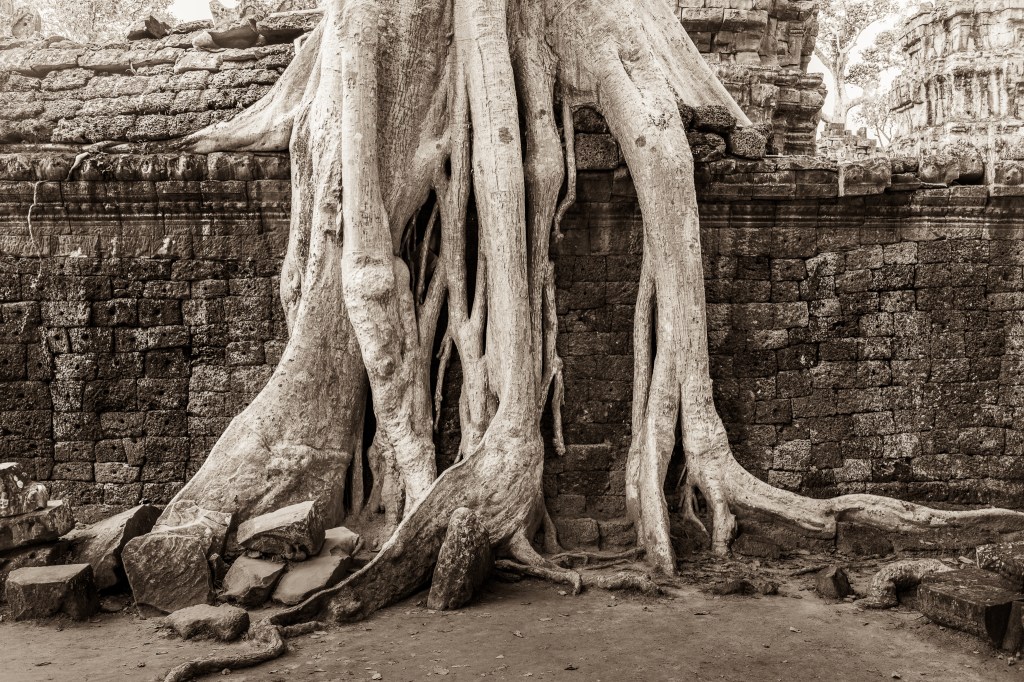
This has been a portfolio almost 14 years in the making, but I can finally say that I have a collection of images that shows the mood and the feeling I had when I visited. I hope you find them somewhat interesting, too.
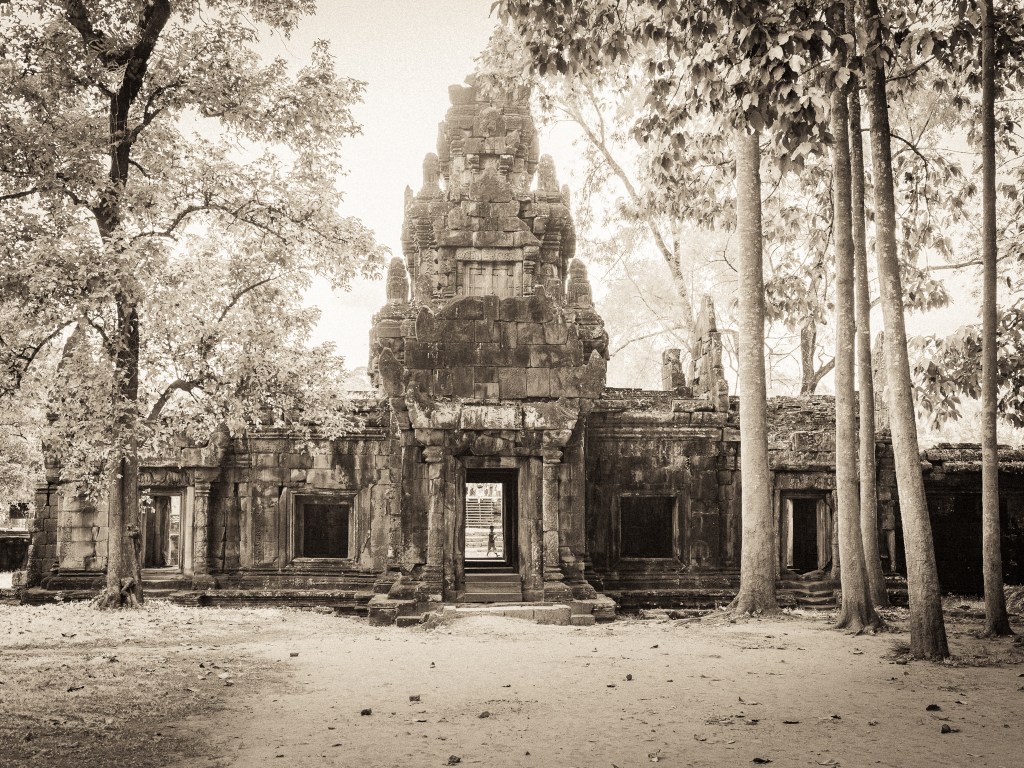
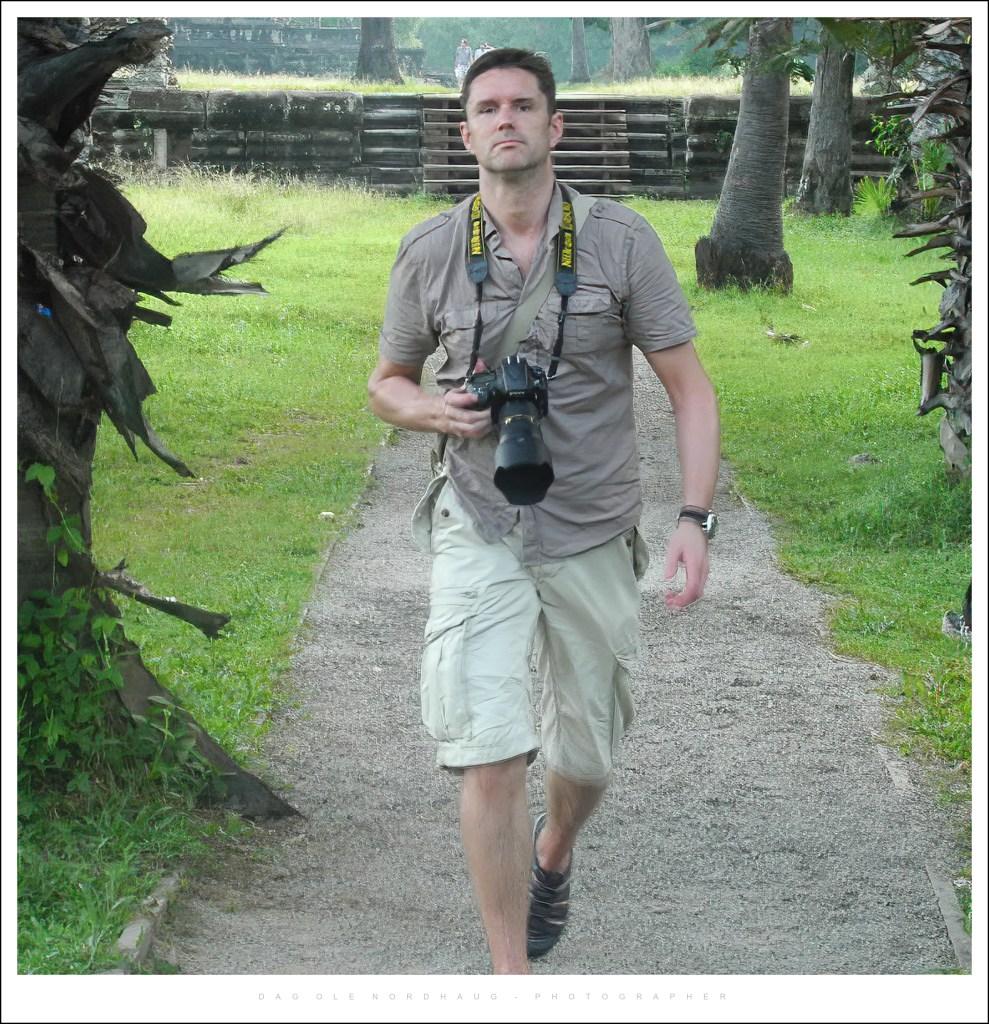
All images were captured with my then favorite camera/lens combo: Nikon D800E with the 24-70 f2.8. All of them, except the early morning shot of Angkor Wat, was captured hand-held. For some of them I had to use iso 3200, but the noise is absolutely no problem when processed in this style. If anything it adds to the feeling. Some are also a bit soft due to long shutter-speeds and fully open aperture, but that disappears with the grain in processing. Next, I will try to print some: 40×50 cm on matte paper, (my favorite, Canson Arches 88) mounted on a passepartout. I think they will turn out quite nice, and bring me back to those few magical days I got to spend there 14 years ago. And I will return!
 LANDSCAPEPHOTOGRAPHY ETC.